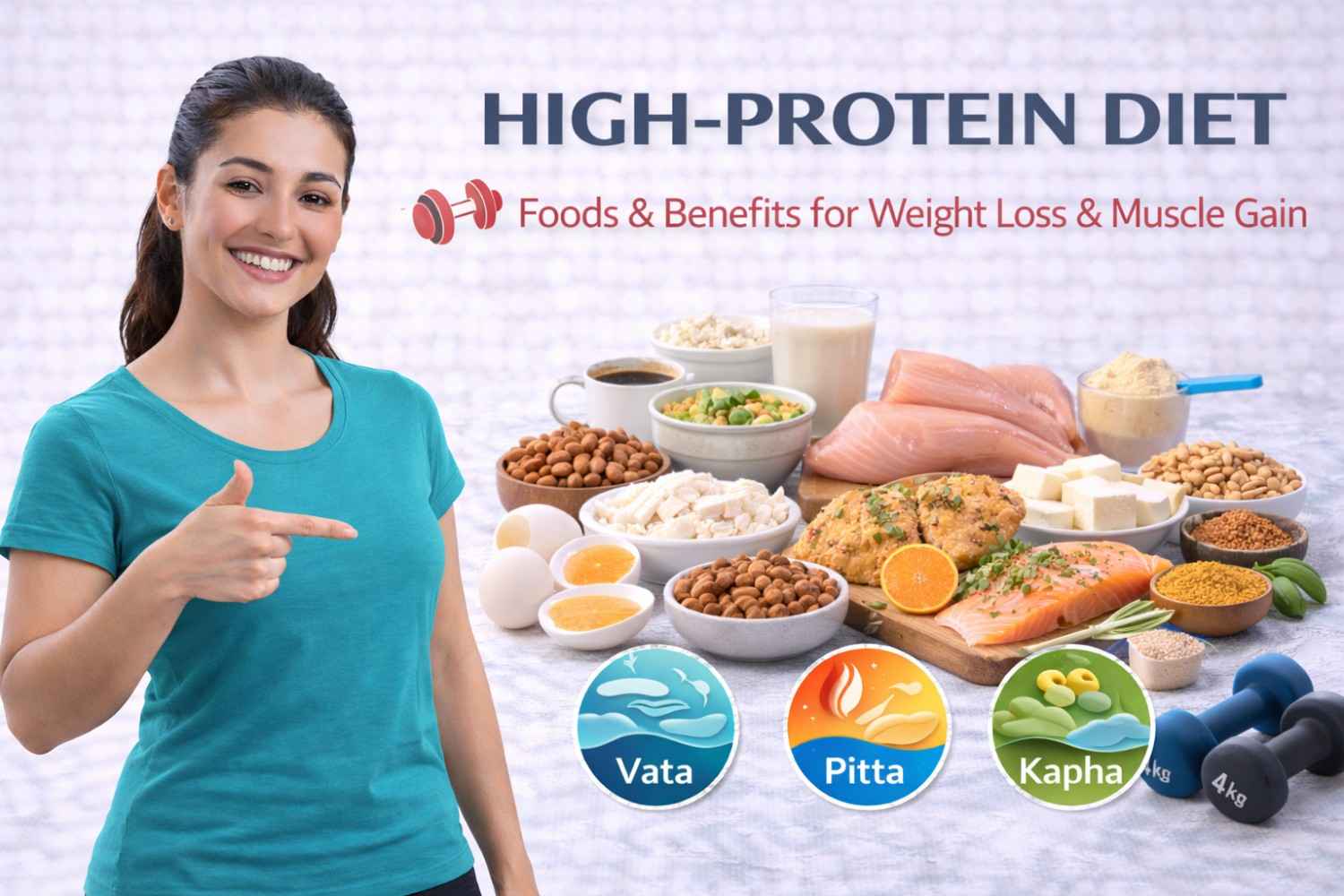
High-Protein Diet: Benefits, Best Foods & Complete Meal Plan
A high-protein diet focuses on increasing protein intake to support muscle growth, fat loss, metabolism, and overall health. Protein is an essential macronutrient that helps build tissues, repair muscles, control appetite, and maintain healthy body weight.
This diet is commonly followed for weight loss, weight gain, fitness, bodybuilding, diabetes control, and healthy aging.
This complete guide explains what a high-protein diet is, benefits, who should follow it, best foods, foods to avoid, daily habits, exercises, and a 7-day high-protein diet plan.
What Is a High-Protein Diet?
A high-protein diet is an eating pattern where protein intake is higher than standard recommendations, while carbs and fats are balanced according to health goals.
Typical Protein Intake
- Normal diet: ~10–15% protein
- High-protein diet: 20–35% protein
Benefits of a High-Protein Diet
- Supports muscle growth & strength
- Aids healthy weight loss
- Reduces hunger & cravings
- Boosts metabolism
- Improves blood sugar control
- Helps in faster recovery after exercise
Who Can Benefit from a High-Protein Diet?
- People trying to lose weight
- Underweight individuals aiming to gain muscle
- Fitness enthusiasts & gym-goers
- Older adults (muscle preservation)
- People with insulin resistance (with guidance)
Health Problems Linked to Low Protein Intake
- Muscle weakness
- Hair fall
- Weak immunity
- Slow recovery
- Fatigue
- Poor metabolism
A balanced high-protein diet helps prevent these issues.
Best Foods for a High-Protein Diet
1. Animal Protein Sources
- Eggs
- Chicken breast
- Fish
- Greek yogurt
- Milk
✔ Complete proteins
✔ High muscle-building value
2. Vegetarian Protein Sources
- Paneer (low fat)
- Lentils (dal)
- Chickpeas
- Kidney beans (rajma)
- Soy & tofu
✔ Rich in fiber
✔ Heart-friendly
3. Nuts & Seeds
- Almonds
- Peanuts
- Chia seeds
- Flax seeds
✔ Healthy fats + protein
4. Protein-Rich Dairy
- Paneer
- Curd
- Greek yogurt
✔ Calcium + protein combo
Best Drinks with a High-Protein Diet
- Water
- Milk
- Protein smoothies
- Buttermilk
🚫 Avoid sugary shakes and soft drinks
Foods to Avoid on a High-Protein Diet
🚫 Processed meats
🚫 Sugary snacks
🚫 Excess refined carbs
🚫 Fried food
🚫 Alcohol (excess)
Best Exercises with a High-Protein Diet
Protein works best when combined with exercise.
Recommended Exercises
- Strength training
- Body-weight workouts
- Resistance training
- Light cardio
👉 Protein + strength training = muscle gain & fat loss
Daily Tips for High-Protein Diet
- Spread protein intake across meals
- Drink enough water
- Balance protein with fiber & vegetables
- Avoid extremely high protein without guidance
- Choose natural protein sources
Weekly High-Protein Diet Plan
| Day | Breakfast | Lunch | Evening | Dinner |
|---|---|---|---|---|
| Monday | Eggs + toast | Roti + dal + sabzi | Nuts | Paneer |
| Tuesday | Oats + milk | Rice + chole | Yogurt | Veg curry |
| Wednesday | Smoothie | Roti + rajma | Nuts | Paneer bhurji |
| Thursday | Eggs / paneer | Veg pulao | Milk | Soup |
| Friday | Oats + yogurt | Roti + dal | Fruit | Paneer |
| Saturday | Idli + curd | Veg thali | Nuts | Salad |
| Sunday | Eggs / tofu | Veg biryani | Milk | Light dinner |
FAQs About High-Protein Diet
Is a high-protein diet safe?
Yes, when balanced and followed correctly.
Does high-protein diet damage kidneys?
Healthy individuals can safely follow it; kidney patients need medical advice.
Is high-protein diet good for weight loss?
Yes, it reduces hunger and preserves muscle.
Can vegetarians follow a high-protein diet?
Absolutely, with lentils, paneer, soy, and dairy.
Conclusion
A high-protein diet is a powerful and flexible eating strategy for weight management, muscle strength, and overall health.
When combined with vegetables, healthy fats, exercise, and proper hydration, a high-protein diet delivers long-term sustainable results.