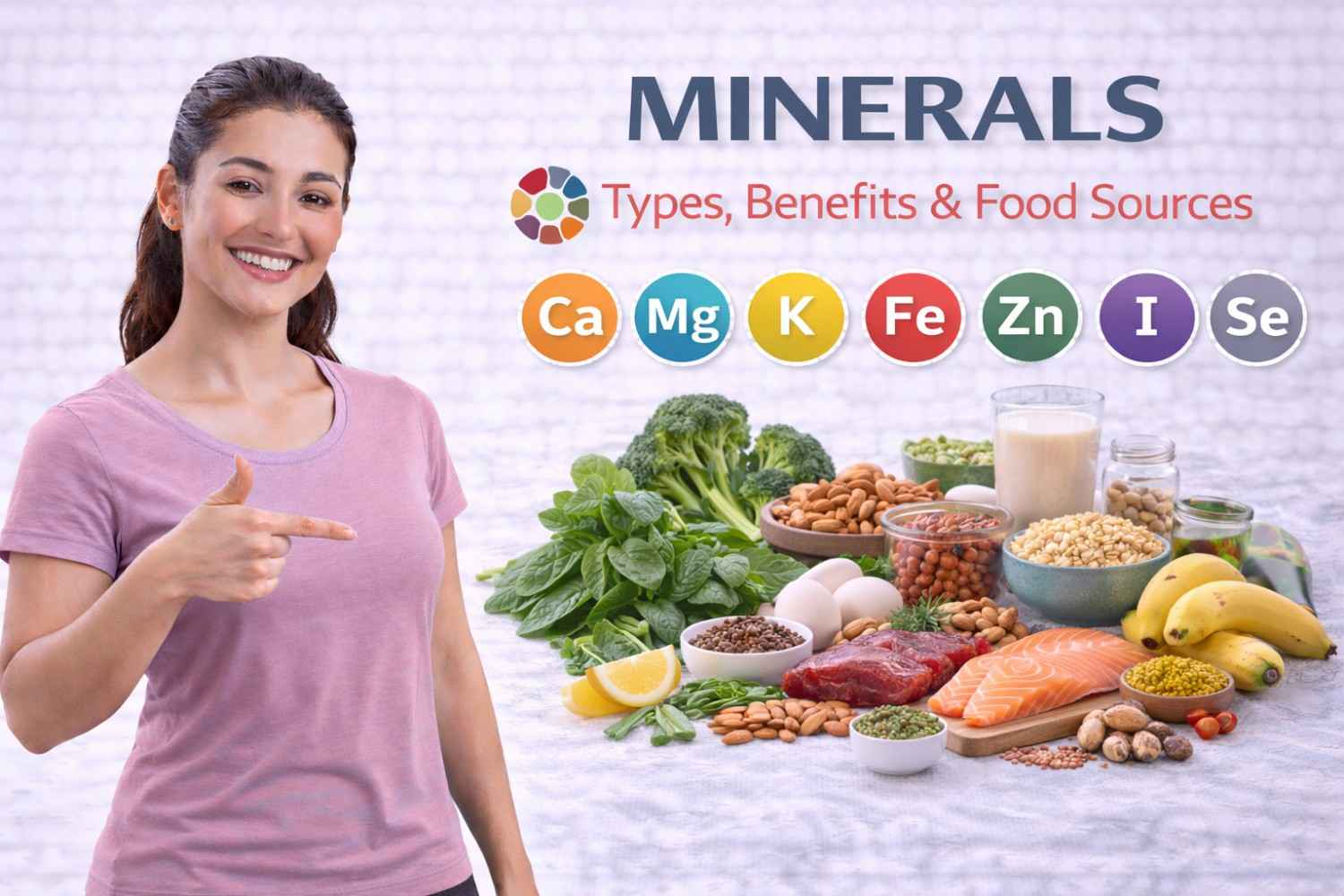
Minerals: Types, Benefits, Food Sources & Importance for Health
Minerals are essential nutrients required by the body to maintain strong bones, healthy blood, proper nerve function, muscle movement, immunity, and overall growth.
Unlike vitamins, minerals are inorganic elements and must be obtained through a balanced diet.
This complete guide explains what minerals are, types of minerals, benefits, food sources, deficiency symptoms, and daily intake tips.
What Are Minerals?
Minerals are nutrients that:
- Build strong bones and teeth
- Regulate fluid balance
- Support nerve and muscle function
- Help produce hormones and enzymes
- Maintain heart rhythm and blood pressure
A deficiency of minerals can cause fatigue, weak immunity, bone problems, anemia, muscle cramps, and long-term health issues.
Types of Minerals
Minerals are divided into two main categories:
1. Macrominerals
Needed in larger amounts by the body.
Includes:
- Calcium
- Phosphorus
- Magnesium
- Sodium
- Potassium
- Chloride
2. Trace Minerals
Needed in smaller amounts but equally important.
Includes:
- Iron
- Zinc
- Iodine
- Selenium
- Copper
- Manganese
Major Minerals, Benefits & Food Sources
Calcium
Benefits:
- Strong bones & teeth
- Muscle contraction
- Heart rhythm control
Food Sources:
- Milk
- Curd
- Paneer
- Sesame seeds
- Leafy greens
Deficiency Symptoms:
- Weak bones
- Muscle cramps
- Osteoporosis
Magnesium
Benefits:
- Muscle & nerve function
- Stress reduction
- Better sleep
Food Sources:
- Nuts
- Seeds
- Whole grains
- Spinach
Deficiency Symptoms:
- Muscle cramps
- Fatigue
- Anxiety
Potassium
Benefits:
- Controls blood pressure
- Supports heart health
- Prevents muscle weakness
Food Sources:
- Banana
- Potato
- Coconut water
- Beans
Deficiency Symptoms:
- Weakness
- Irregular heartbeat
Iron
Benefits:
- Oxygen transport in blood
- Prevents anemia
- Improves energy
Food Sources:
- Spinach
- Lentils
- Beans
- Dates
- Red meat
Deficiency Symptoms:
- Fatigue
- Pale skin
- Shortness of breath
Zinc
Benefits:
- Boosts immunity
- Supports wound healing
- Improves skin health
Food Sources:
- Pumpkin seeds
- Nuts
- Whole grains
- Dairy products
Deficiency Symptoms:
- Frequent infections
- Hair fall
- Poor wound healing
Iodine
Benefits:
- Thyroid hormone production
- Metabolism regulation
Food Sources:
- Iodized salt
- Seafood
- Dairy
Deficiency Symptoms:
- Thyroid disorders
- Weight gain
- Fatigue
Selenium
Benefits:
- Antioxidant support
- Thyroid health
Food Sources:
- Brazil nuts
- Eggs
- Fish
Deficiency Symptoms:
- Weak immunity
- Hair loss
Health Problems Caused by Mineral Deficiency
- Weak bones & teeth
- Anemia
- Muscle cramps
- Low immunity
- Hormonal imbalance
- Heart rhythm problems
Best Foods Rich in Minerals
- Green leafy vegetables
- Whole grains
- Nuts & seeds
- Fruits
- Dairy products
- Legumes
👉 Eating a varied and balanced diet ensures proper mineral intake.
Do You Need Mineral Supplements?
Supplements may be required if:
- Medical deficiency exists
- Pregnancy or old age
- Poor dietary intake
🚫 Avoid taking supplements without medical advice.
Do You Need Mineral Supplements?
Supplements may be required if:
- Medical deficiency exists
- Pregnancy or old age
- Poor dietary intake
🚫 Avoid taking supplements without medical advice.
Daily Tips to Improve Mineral Intake
- Eat fresh & whole foods
- Reduce excess salt & sugar
- Drink enough water
- Avoid over-processed food
- Combine minerals with vitamins (e.g., Vitamin D + Calcium)
FAQs About Minerals
Are minerals needed daily?
Yes, especially macrominerals.
Can excess minerals be harmful?
Yes, excess intake may cause toxicity.
Are natural food minerals better than supplements?
Yes, natural food sources are best absorbed.
Which mineral is most important for bones?
Calcium, phosphorus, and magnesium.
Conclusion
Minerals are essential building blocks of health.
A balanced diet rich in vegetables, fruits, whole grains, dairy, nuts, and seeds ensures adequate mineral intake, helping maintain strong bones, healthy blood, proper metabolism, and overall wellness.