Proteins: Benefits, Food Sources & Why Protein Is Essential for Health
Proteins are one of the most important nutrients required by the human body. They play a vital role in muscle building, tissue repair, immunity, hormone production, and overall growth.
Every cell in the body contains protein, which makes it essential for daily health and long-term wellness.
This complete guide explains what proteins are, types of proteins, health benefits, best food sources, deficiency symptoms, daily protein needs, and tips to improve protein intake.
What Are Proteins?
Proteins are macronutrients made up of smaller units called amino acids.
These amino acids help in:
- Building muscles and tissues
- Repairing damaged cells
- Producing enzymes and hormones
- Supporting immune function
👉 The body cannot store protein, so it must be consumed daily through diet.
Types of Proteins
1. Complete Proteins
Contain all 9 essential amino acids.
Sources:
- Eggs
- Milk & dairy
- Meat
- Fish
2. Incomplete Proteins
Lack one or more essential amino acids.
Sources:
- Lentils
- Beans
- Nuts
- Seeds
- Whole grains
👉 Combining different plant proteins provides complete nutrition.
Health Benefits of Proteins
- Build and maintain muscle mass
- Support weight loss by reducing hunger
- Strengthen immunity
- Improve metabolism
- Support hormone & enzyme production
- Aid in recovery and healing
Health Problems Caused by Protein Deficiency
Low protein intake may lead to:
- Muscle weakness
- Fatigue
- Hair fall
- Weak immunity
- Slow wound healing
- Poor growth in children
Best Protein-Rich Foods
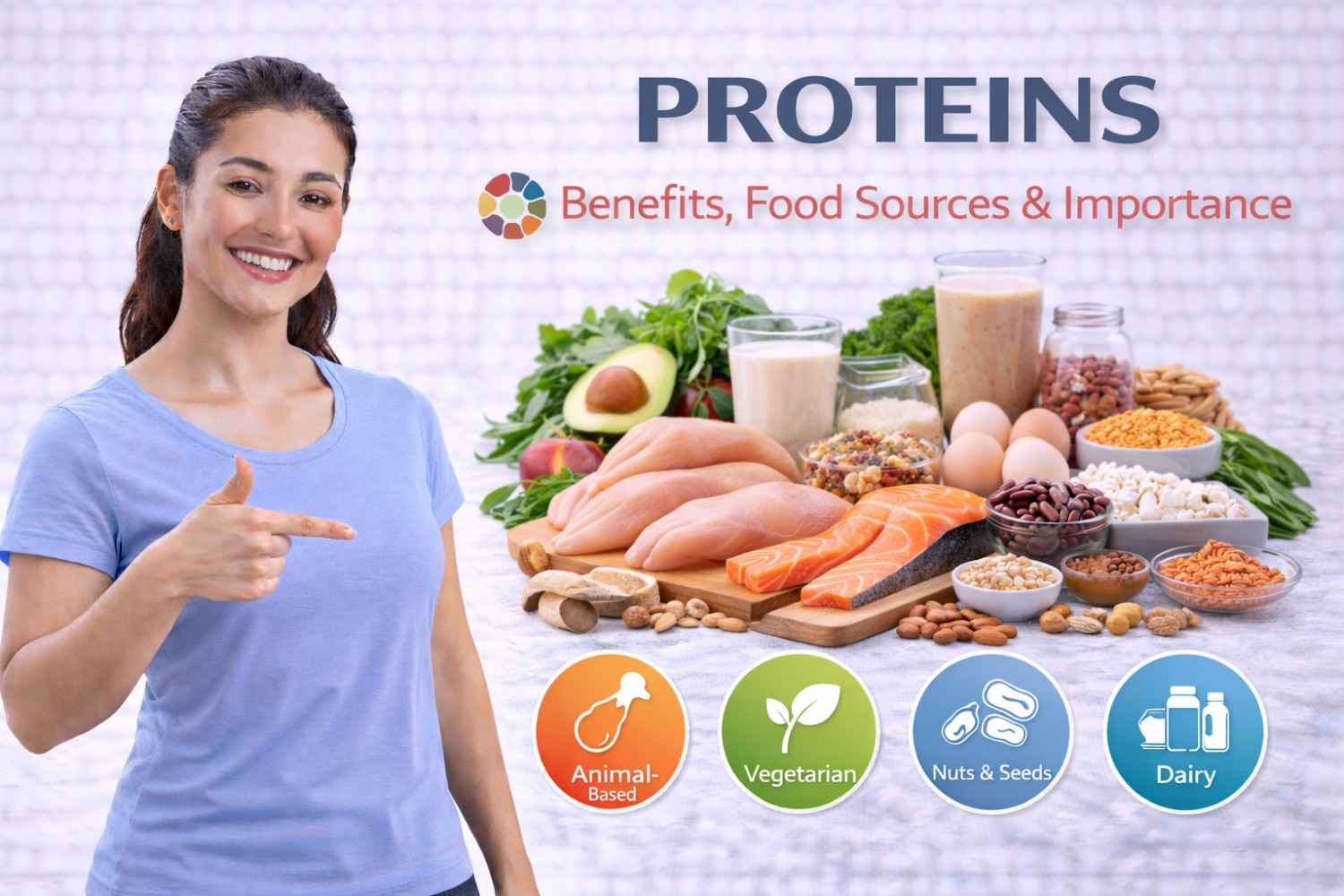
Animal-Based Protein Sources
- Eggs
- Chicken
- Fish
- Milk
- Yogurt
✔ High biological value
✔ Easily absorbed
Vegetarian Protein Sources
- Lentils (dal)
- Chickpeas
- Rajma
- Paneer
- Tofu
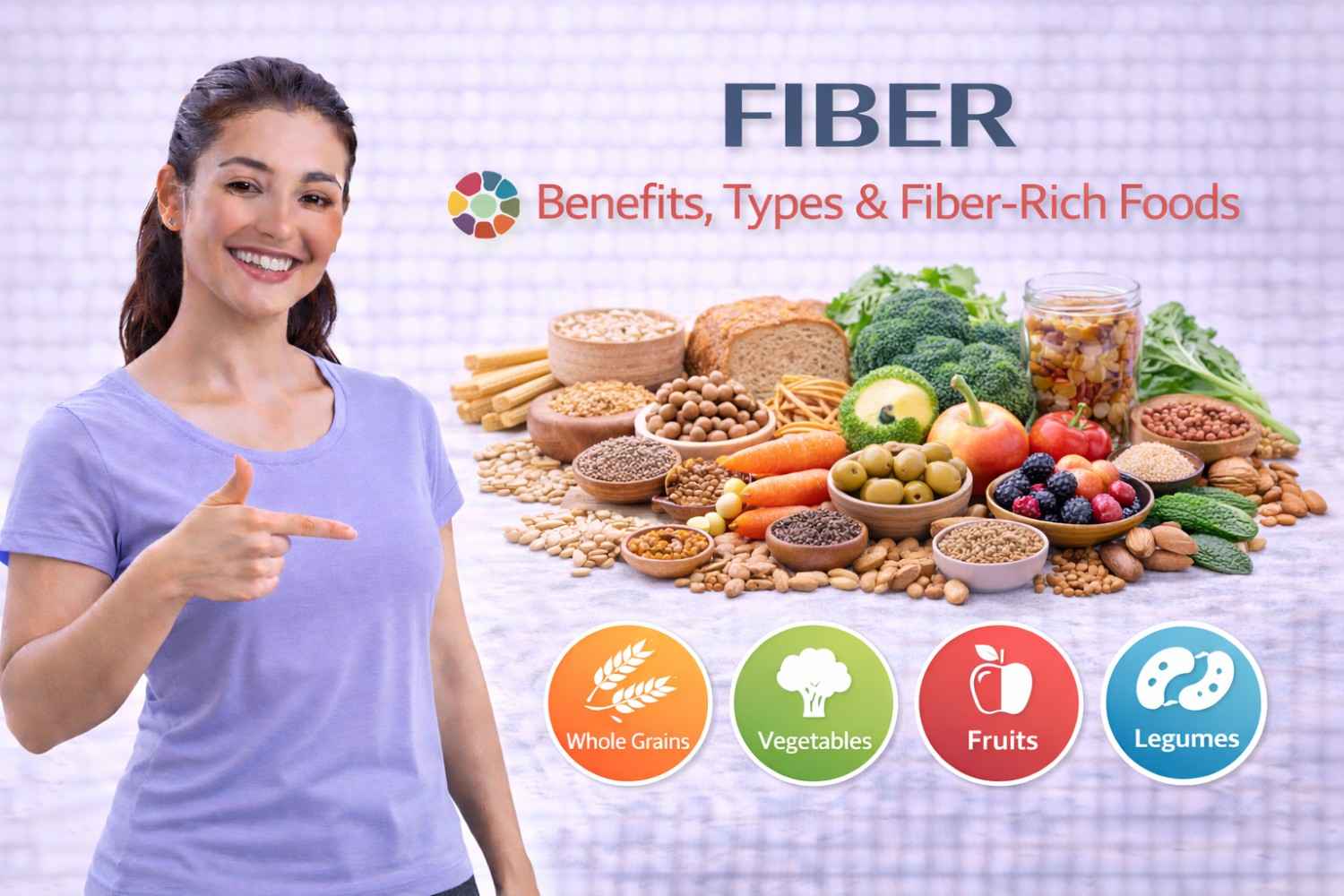
✔ High fiber
✔ Heart-friendly
Nuts & Seeds
- Almonds
- Peanuts
- Chia seeds
- Flax seeds
✔ Protein + healthy fats
Dairy Protein Sources
- Milk
- Curd
- Paneer
- Greek yogurt
✔ Calcium + protein combination
How Much Protein Do You Need Daily?
General guideline:
- Average adult: 0.8–1 g per kg body weight
- Active individuals: 1.2–1.5 g/kg
- Muscle gain: 1.6–2 g/kg
👉 Needs vary by age, activity level, and health condition.
Best Drinks to Support Protein Intake
- Milk
- Protein smoothies
- Buttermilk
🚫 Avoid sugary protein shakes
Protein & Exercise Relationship
Protein works best when combined with:
- Strength training
- Resistance exercises
- Body-weight workouts
👉 Protein + exercise = muscle gain & fat loss
Daily Tips to Increase Protein Intake
- Include protein in every meal
- Combine plant protein sources
- Avoid skipping meals
- Stay hydrated
- Prefer natural food sources over supplements
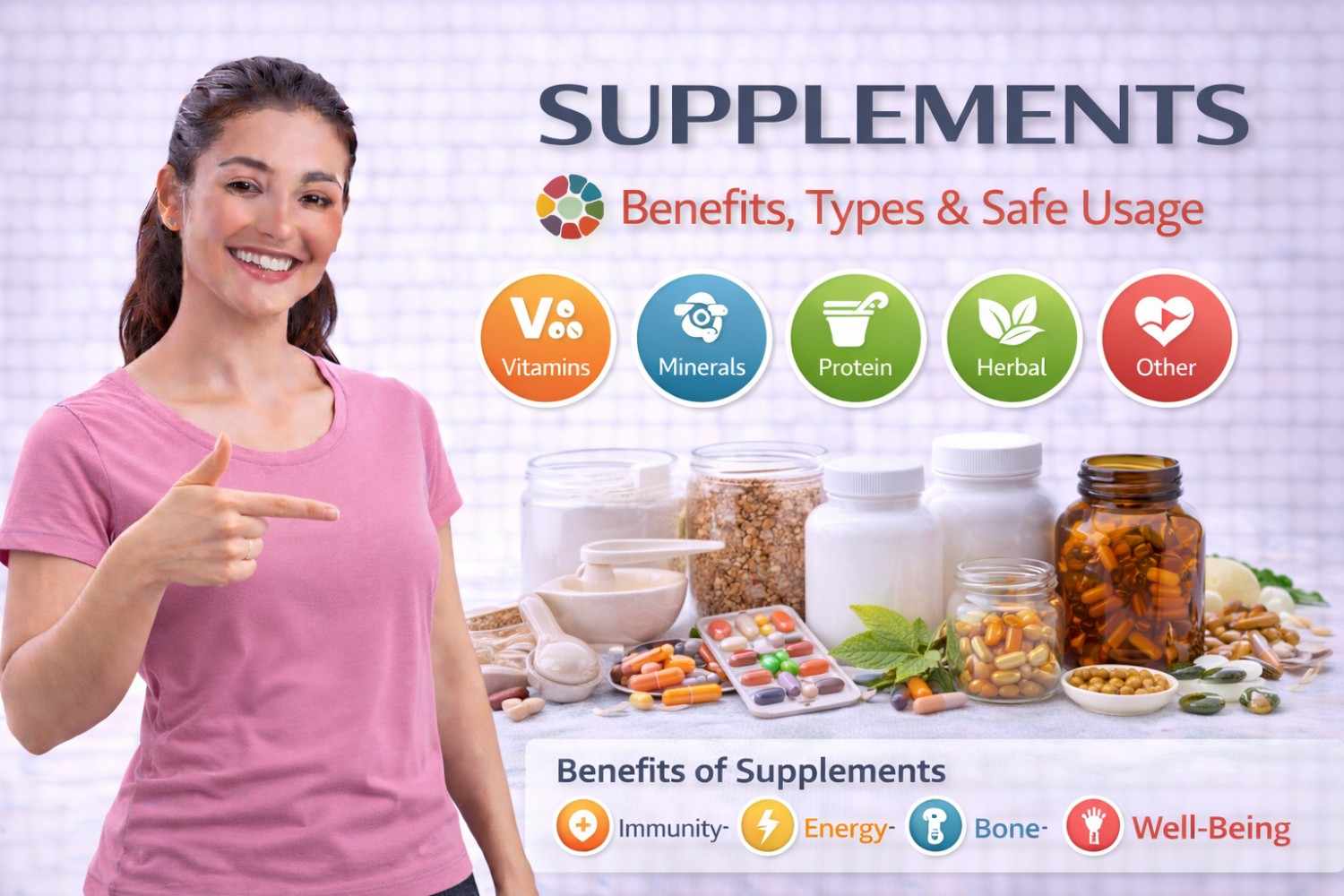
Do You Need Protein Supplements?
Protein supplements may help:
- Athletes
- Gym-goers
- People with high protein needs
🚫 Whole foods should always be the first choice.
FAQs About Proteins
Is protein good for weight loss?
Yes, protein reduces hunger and preserves muscle.
Can vegetarians get enough protein?
Yes, with lentils, dairy, soy, and nuts.
Does excess protein harm kidneys?
Healthy individuals can consume higher protein safely; kidney patients need medical advice.
Which protein is best?
Eggs and dairy are among the best complete proteins.
Conclusion
Proteins are the building blocks of life.
A balanced diet rich in protein supports muscle strength, immunity, metabolism, and overall health. By choosing natural protein-rich foods, spreading intake throughout the day, and staying active, you can meet your protein needs safely and effectively.