Nuts & Seeds: Health Benefits, Types & Importance in a Healthy Diet
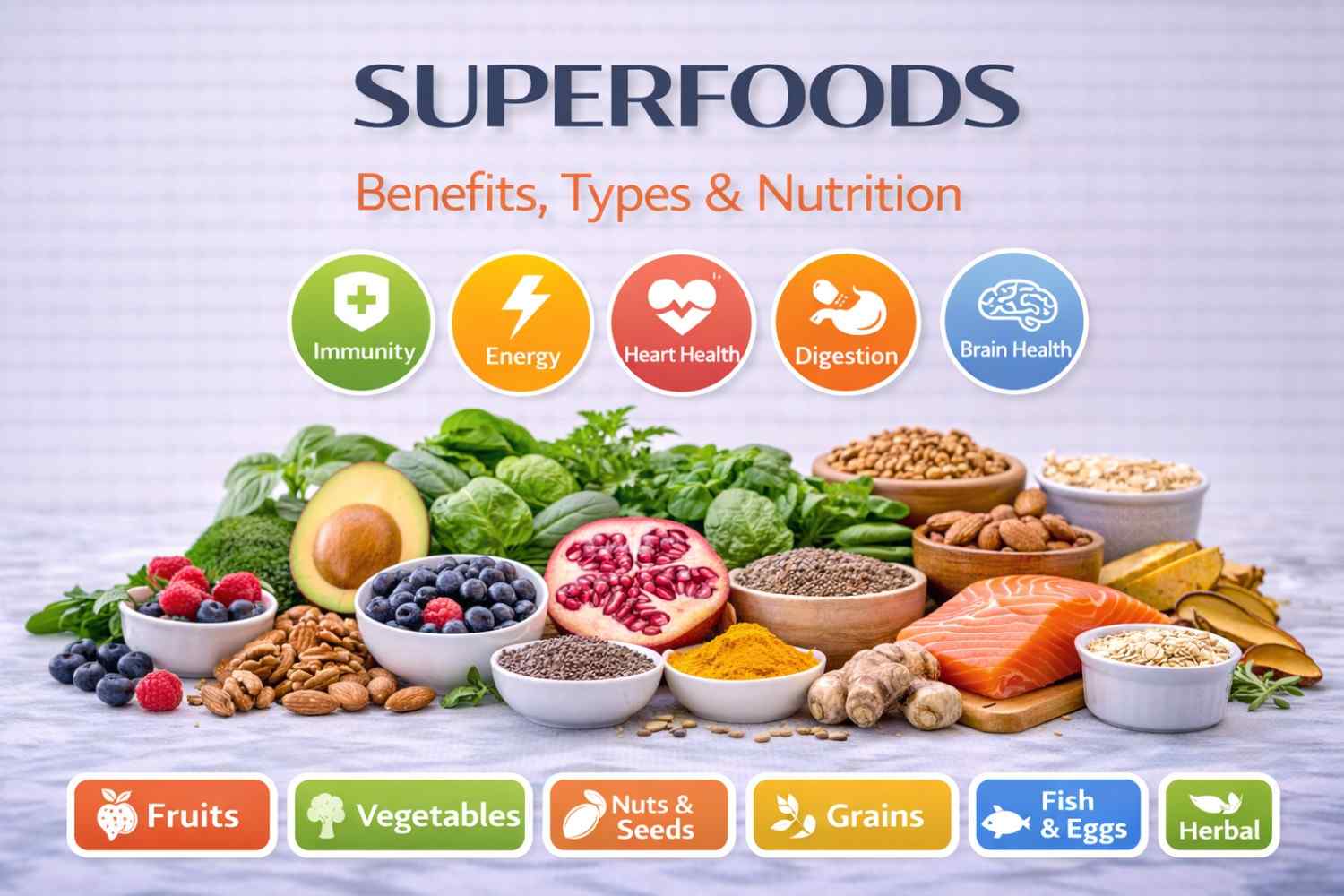
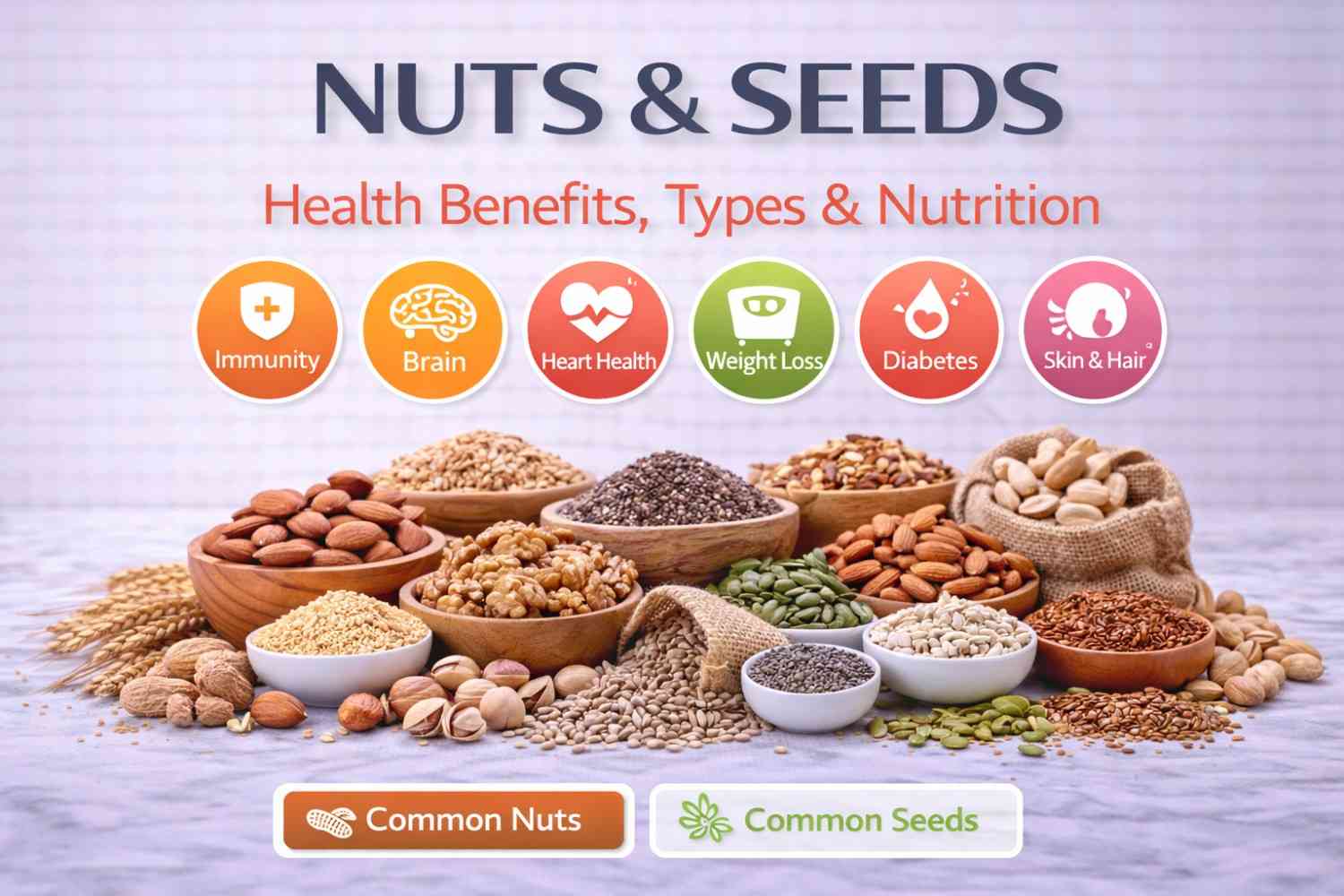
Nuts and seeds are small but extremely powerful foods packed with healthy fats, protein, fiber, vitamins, minerals, and antioxidants.
Regular consumption of nuts and seeds supports heart health, brain function, weight management, immunity, and overall wellness.
This complete guide explains what nuts and seeds are, types, health benefits, nutritional value, best nuts and seeds for specific health goals, daily intake, and tips to eat them correctly.
What Are Nuts & Seeds?
- Nuts are hard-shelled fruits containing a seed (e.g., almonds, walnuts).
- Seeds are embryonic plants capable of growing into a new plant (e.g., chia, flax).
They are energy-dense foods, meaning a small quantity provides high nutrition.
Health Benefits of Nuts & Seeds
- Improve heart health
- Support brain function
- Boost immunity
- Aid in weight management
- Improve digestion
- Support skin & hair health
- Reduce inflammation
Nutritional Value of Nuts & Seeds
Nuts and seeds are rich in:
- Healthy fats (Omega-3 & Omega-6)
- Plant protein
- Dietary fiber
- Vitamin E
- Magnesium
- Zinc
- Selenium
👉 They are nutrient-dense superfoods.
Types of Nuts
Common Nuts
- Almonds
- Walnuts
- Cashews
- Pistachios
- Peanuts
Benefits:
✔ Heart & brain health
✔ Muscle support
Types of Seeds
Common Seeds
- Chia seeds
- Flax seeds
- Pumpkin seeds
- Sunflower seeds
- Sesame seeds
Benefits:
✔ Digestion
✔ Hormone balance
✔ Immunity support
Best Nuts & Seeds for Specific Health Goals
For Immunity
- Almonds
- Pumpkin seeds
- Sunflower seeds
For Weight Loss
- Almonds
- Walnuts
- Chia seeds
For Heart Health
- Walnuts
- Flax seeds
- Almonds
For Brain Health
- Walnuts
- Pumpkin seeds
For Skin & Hair
- Almonds
- Sunflower seeds
- Sesame seeds
Common Mistakes While Eating Nuts & Seeds
🚫 Overeating (high calories)
🚫 Salted or fried nuts
🚫 Sugary nut mixes
🚫 Ignoring portion control
Best Time to Eat Nuts & Seeds
✔ Morning (soaked nuts)
✔ Mid-day snack
✔ Pre-workout
🚫 Avoid heavy intake late at night
How Much Nuts & Seeds Should You Eat Daily?
Recommended:
- Nuts: 20–30 grams/day
- Seeds: 1–2 tablespoons/day
👉 Moderation is key.
Healthy Ways to Eat Nuts & Seeds
- Eat soaked nuts
- Add seeds to smoothies or salads
- Use nut butters (unsweetened)
- Sprinkle seeds on yogurt or oats
FAQs About Nuts & Seeds
Are nuts fattening?
No, when eaten in moderation.
Can diabetics eat nuts and seeds?
Yes, they help control blood sugar.
Are roasted nuts healthy?
Dry-roasted are better than fried.
Which nuts are best daily?
Almonds and walnuts are excellent daily choices.
Conclusion
Nuts and seeds are nutritional powerhouses that should be part of a balanced diet.
When eaten in the right quantity and form, they improve heart health, boost immunity, support brain function, and aid weight management.
Small portions, big health benefits.