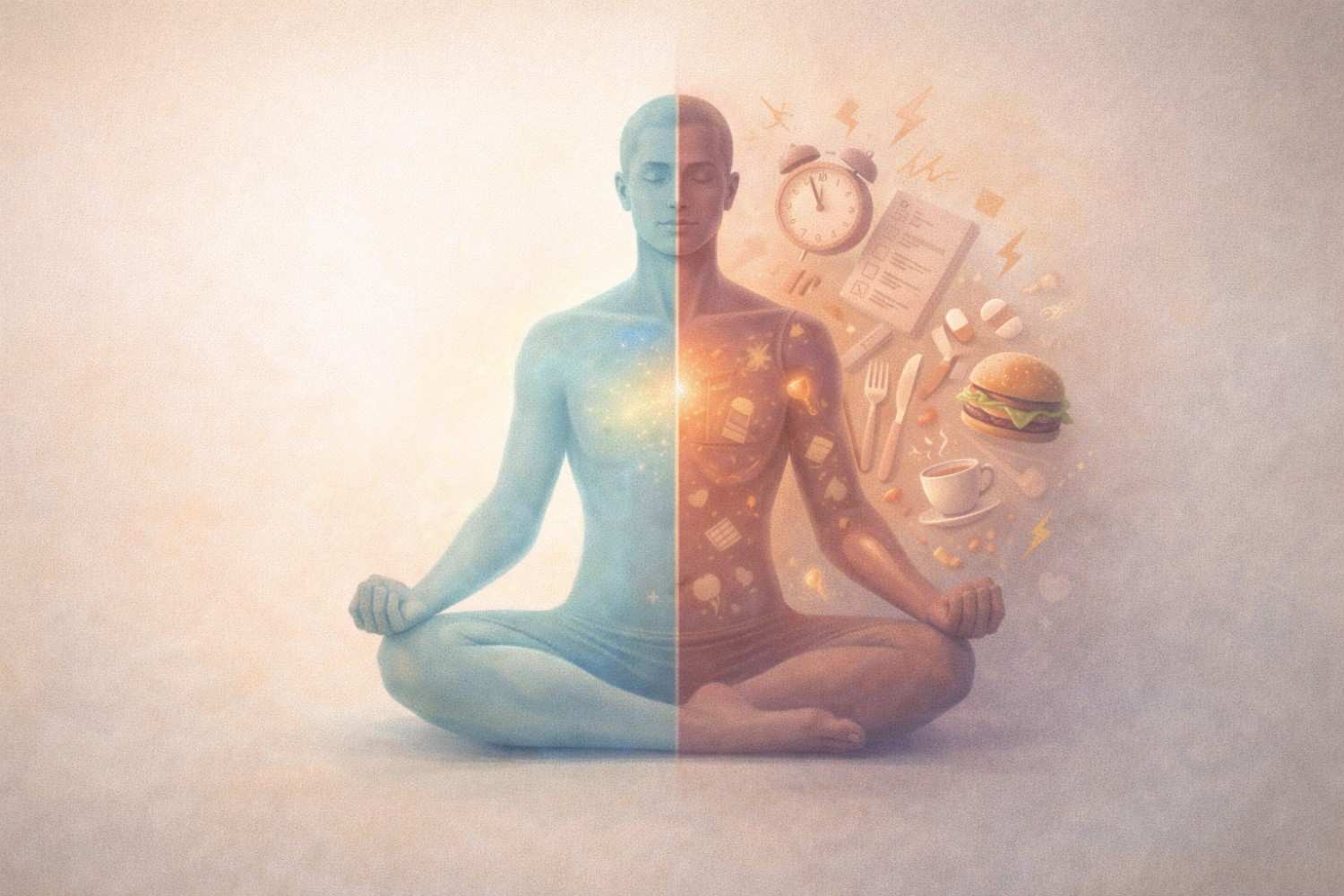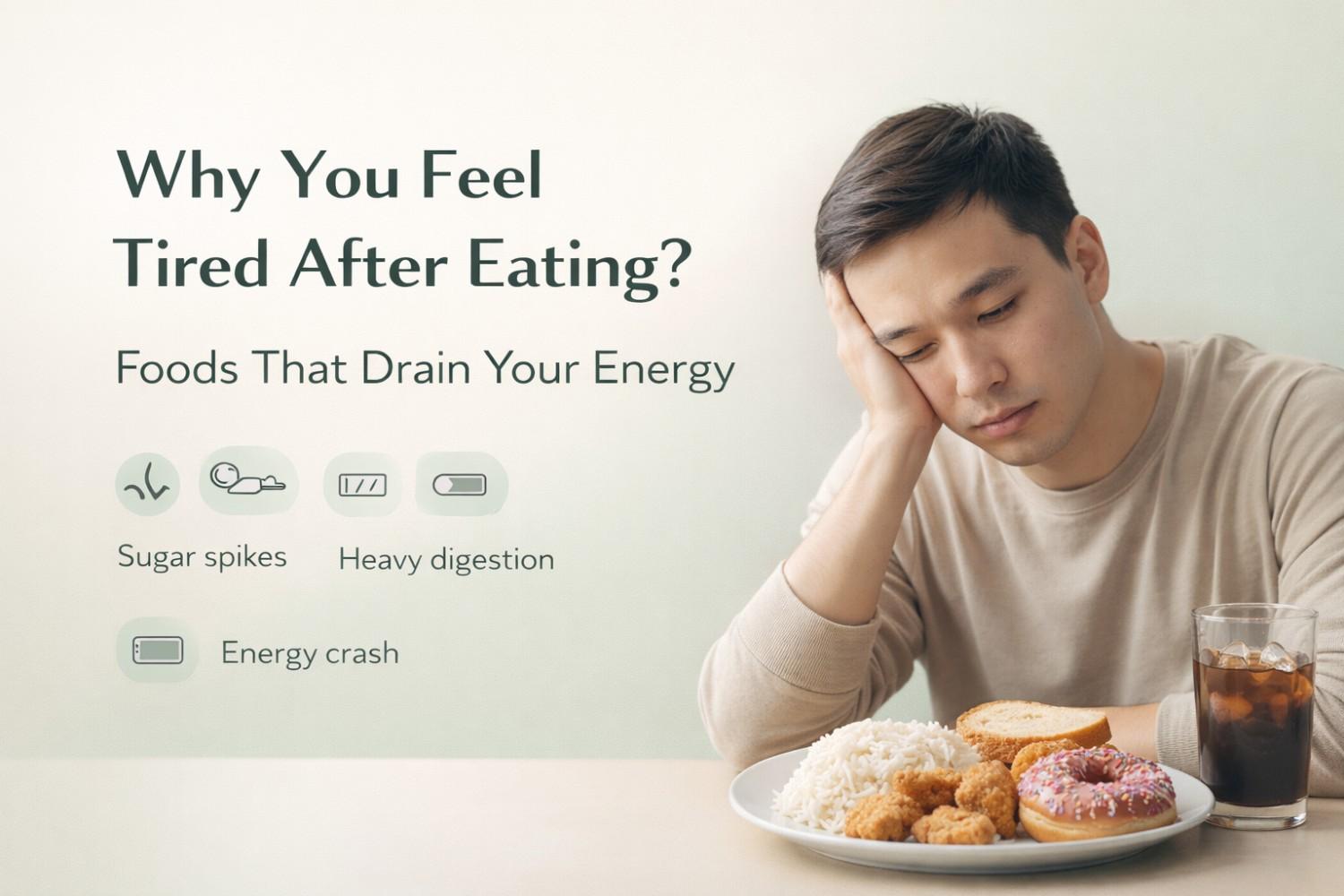
Feeling sleepy, heavy, or mentally foggy after a meal is extremely common. Many people think it is “normal digestion” or blame it on age, work stress, or lack of sleep. But in reality, post-meal tiredness (also called postprandial fatigue) is often caused by what you eat, how you eat, and when you eat.
This article explains why you feel tired after eating, the foods that secretly drain your energy, and practical ways to eat for sustained energy instead of crashes.
What Is Post-Meal Fatigue?
Post-meal fatigue is a condition where you feel:
- Sleepy or drowsy
- Heavy in the stomach
- Low in energy
- Mentally slow or unfocused
- Less motivated to work or move
This can happen 15–90 minutes after eating, depending on the meal.
Occasional tiredness is normal, but daily fatigue after meals is a warning sign that your food choices or eating habits are working against your body.
The Science Behind Why You Feel Tired After Eating
1. Blood Flow Shifts to Digestion
After eating, your body sends more blood to the digestive system to break down food. This temporarily reduces blood flow to the brain and muscles, making you feel sleepy.
👉 This effect is normal, but it becomes stronger with heavy, unhealthy meals.
2. Blood Sugar Spikes and Crashes
When you eat foods high in refined carbohydrates or sugar, blood sugar rises rapidly. The body releases insulin to manage it.
- Fast rise = strong insulin release
- Strong insulin = rapid blood sugar drop
- Rapid drop = fatigue, sleepiness, cravings
This is one of the biggest reasons people feel exhausted after meals.
3. Hormonal Changes After Eating
Certain foods increase the release of:
- Serotonin (calming hormone)
- Melatonin (sleep hormone)
This is why large meals, especially high-carb or high-fat meals, make you feel sleepy.
4. Inflammation from Poor Food Choices
Highly processed foods cause low-grade inflammation in the body. Inflammation uses energy to fight damage, leaving you feeling tired and drained.
Foods That Drain Your Energy (The Hidden Culprits)
1. Refined Carbohydrates (Biggest Energy Thief)
Examples:
- White rice
- White bread
- Maida roti
- Pasta
- Bakery items
These foods:
- Digest very quickly
- Cause blood sugar spikes
- Lead to rapid energy crashes
You feel energetic for a short time, followed by heaviness and sleepiness.
2. Sugary Foods and Drinks
Examples:
- Soft drinks
- Fruit juices (even packaged “healthy” ones)
- Sweets
- Desserts
- Sweet tea or coffee
Sugar gives false energy. It excites the nervous system briefly and then causes a crash that feels like:
- Extreme tiredness
- Brain fog
- Mood swings
3. Heavy Fried Foods
Examples:
- Deep-fried snacks
- Fast food
- Pakoras, samosas
- French fries
Fats take longer to digest and demand more energy from your digestive system. The result:
- Sluggish digestion
- Blood diverted away from the brain
- Feeling lazy and sleepy
4. Overeating (Even Healthy Food)
Even healthy food becomes a problem when you eat too much at once.
Large meals:
- Slow digestion
- Increase insulin release
- Increase fatigue
Your body works harder to digest excess food, leaving less energy for mental and physical activity.
5. Processed Foods
Examples:
- Packaged snacks
- Ready-to-eat meals
- Instant noodles
- Processed meats
These foods:
- Lack fiber and micronutrients
- Contain preservatives and additives
- Cause inflammation
They consume energy instead of providing it.
6. High-Fat + High-Carb Combinations (Worst Combo)
Examples:
- Pizza
- Burgers
- Butter naan + creamy gravy
- Fried rice
This combination:
- Spikes blood sugar
- Slows digestion
- Increases insulin resistance
Result: extreme sleepiness and mental fog.
7. Alcohol with Meals
Alcohol:
- Slows digestion
- Lowers blood sugar
- Suppresses the nervous system
Even small amounts can increase post-meal fatigue.
Eating Habits That Make You Tired (Even with Good Food)
1. Eating Too Fast
Fast eating:
- Overloads digestion
- Reduces satiety signals
- Leads to overeating
Your body struggles to keep up, causing fatigue.
2. Skipping Meals, Then Eating Big
Long gaps between meals cause:
- Low blood sugar
- Overeating later
- Strong insulin spikes
This creates a cycle of tiredness.
3. Eating Late at Night
Late meals:
- Disrupt circadian rhythm
- Reduce sleep quality
- Increase morning fatigue
4. Poor Food Combinations
Examples:
- High sugar + high fat
- Fruit with heavy meals
- Desserts immediately after meals
These combinations slow digestion and drain energy.
Foods That GIVE Energy Instead of Taking It
1. Complex Carbohydrates
Examples:
- Brown rice
- Oats
- Millets
- Whole wheat
They release glucose slowly, providing steady energy.
2. Protein-Rich Foods
Examples:
- Lentils
- Eggs
- Fish
- Soybeans
- Paneer
Protein stabilizes blood sugar and prevents energy crashes.
3. Fiber-Rich Vegetables
Examples:
- Leafy greens
- Broccoli
- Beans
- Carrots
Fiber slows digestion and improves gut health.
4. Healthy Fats (In Moderation)
Examples:
- Nuts
- Seeds
- Olive oil
- Avocado
They support brain health without causing fatigue when eaten wisely.
5. Water
Dehydration often feels like fatigue. Drinking enough water:
- Improves digestion
- Prevents sluggishness
- Supports energy metabolism
Best Meal Structure for All-Day Energy
A balanced energy-supporting meal should include:
- 40–50% complex carbs
- 25–30% protein
- 20–25% healthy fats
- Plenty of vegetables
Avoid meals that are only carbs or only fats.
Why Office Workers Feel More Tired After Lunch
Common reasons:
- Sitting immediately after eating
- Heavy lunch meals
- Lack of movement
- Screen exposure
👉 A 10–15 minute walk after meals significantly reduces post-meal fatigue.
Is Feeling Sleepy After Eating Normal?
✔ Sometimes — yes
❌ Daily — no
Occasional sleepiness is natural. But daily exhaustion after meals indicates:
- Poor food choices
- Insulin resistance
- Digestive imbalance
- Lifestyle issues
Special Conditions Linked to Post-Meal Fatigue
- Insulin resistance
- Prediabetes
- Food sensitivities
- Poor gut health
- Chronic inflammation
If fatigue is severe and persistent, medical advice is recommended.
Practical Tips to Stop Feeling Tired After Eating
- Eat smaller, balanced meals
- Avoid refined carbs and sugar
- Add protein to every meal
- Chew food slowly
- Walk after meals
- Drink enough water
- Avoid late-night heavy meals
- Sleep properly
Frequently Asked Questions (FAQs)
Why do I feel sleepy after lunch?
Because of blood flow shift, insulin spikes, and heavy meals.
Is rice responsible for post-meal fatigue?
White rice can cause fatigue if eaten in excess. Balance matters.
Can healthy food also cause tiredness?
Yes, if eaten in large quantities or poor combinations.
Does drinking coffee after meals help?
Temporarily, but it does not fix the root cause.
Is post-meal fatigue linked to diabetes?
Yes, it can be an early sign.
Final Thoughts
Feeling tired after eating is not normal aging or laziness. It is your body signaling food imbalance.
By understanding:
- Which foods drain energy
- How digestion works
- How to structure meals
you can eat for sustained energy, mental clarity, and better health.
Food should fuel your life, not slow it down.