PCOS Control Guide: Best Foods, Diet Plan & Natural Ways to Manage PCOS Naturally
PCOS (Polycystic Ovary Syndrome) is one of the most common hormonal disorders affecting women of reproductive age. Millions of women worldwide struggle with PCOS-related symptoms such as irregular periods, weight gain, acne, hair fall, excess facial hair, mood changes, infertility, and insulin resistance.
PCOS is not just a reproductive problem — it is a metabolic and hormonal condition that affects the entire body. If left unmanaged, it can increase the risk of Type 2 diabetes, heart disease, obesity, and fertility issues.
The good news is that PCOS can be effectively managed naturally with the right diet, healthy foods, daily habits, stress management, and long-term consistency.
This complete guide explains what PCOS is, its causes, health problems caused by PCOS, best foods, foods to avoid, natural lifestyle habits, and a 7-day PCOS-friendly diet plan.
pcos self-care, pcod vs pcos, pcos specialists, difference between pcos and pcod, pcod and pcos difference, pcos test
What Is PCOS?
PCOS (Polycystic Ovary Syndrome) is a hormonal condition in which the ovaries produce excess androgens (male hormones) and may develop multiple small cysts.
PCOS mainly affects:
- Menstrual cycle and ovulation
- Weight and metabolism
- Skin and hair health
- Fertility
- Insulin sensitivity
Due to hormonal imbalance, many women with PCOS experience irregular ovulation, making periods unpredictable and conception difficult.
Major Causes of PCOS
PCOS develops due to a combination of hormonal, metabolic, and lifestyle factors.
Common Causes Include:
- Hormonal imbalance (high androgens)
- Insulin resistance
- Poor diet high in sugar and refined carbs
- Chronic stress
- Lack of physical activity
- Genetic factors (family history)
Among all causes, insulin resistance plays the biggest role in PCOS and directly affects weight gain, hormone imbalance, and fertility.
Major Health Problems Caused by PCOS
If PCOS is not managed properly, it can lead to long-term health complications.
1. Weight Gain & Difficulty Losing Weight
Why It Happens:
Insulin resistance slows metabolism and increases fat storage.
Common Symptoms:
- Belly fat
- Slow weight loss despite dieting
Food Solutions:
- High-fiber foods
- Protein-rich meals
- Low-glycemic carbohydrates
2. Irregular Periods & Hormonal Imbalance
Why It Happens:
Hormonal imbalance disrupts ovulation.
Problems:
- Missed or delayed periods
- Heavy or very light bleeding
Food Solutions:
- Whole grains
- Healthy fats
- Balanced meals
3. Insulin Resistance & Risk of Diabetes
Why It Happens:
Cells do not respond properly to insulin, causing high blood sugar levels.
Risks:
- Pre-diabetes
- Type 2 diabetes
Food Solutions:
- Oats
- Vegetables
- Nuts and seeds
- Low-GI fruits
4. Acne, Hair Fall & Excess Facial Hair
Why It Happens:
High androgen (male hormone) levels affect skin and hair.
Problems:
- Acne and oily skin
- Hair thinning or hair fall
- Facial hair growth
Food Solutions:
- Anti-inflammatory foods
- Omega-3 rich foods
- Zinc-rich foods
5. Fertility Problems
Why It Happens:
Irregular ovulation makes conception difficult.
Food Solutions:
- Protein-rich diet
- Healthy fats
- Hormone-balancing foods
With proper management, many women with PCOS conceive naturally.
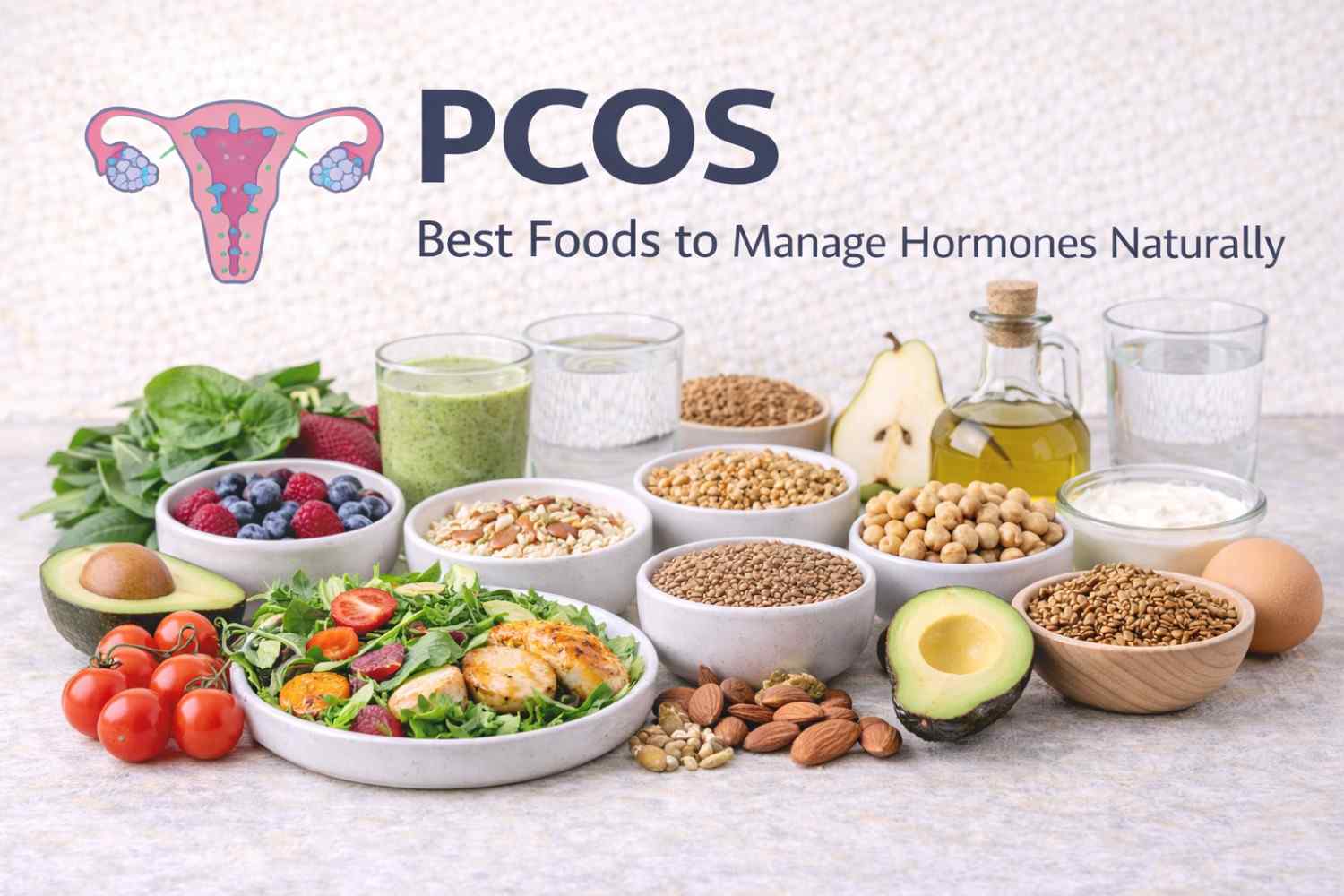
Best Foods for PCOS Management
Choosing the right foods helps balance hormones, improve insulin sensitivity, reduce inflammation, and support weight loss.
1. High-Fiber Vegetables
Spinach, broccoli, bottle gourd, carrot, cabbage
✔ Control blood sugar
✔ Reduce insulin resistance
✔ Improve digestion
2. Low-Glycemic Carbohydrates
Oats, millets, quinoa, brown rice (limited)
✔ Prevent sugar spikes
✔ Improve hormone balance
3. Protein-Rich Foods
Eggs, paneer, lentils, yogurt, tofu
✔ Boost metabolism
✔ Reduce cravings
✔ Support ovulation
4. Healthy Fats
Olive oil, nuts, seeds, avocado
✔ Reduce inflammation
✔ Balance reproductive hormones
5. Antioxidant Fruits
Berries, apple, pear, pomegranate
✔ Improve skin health
✔ Reduce oxidative stress
PCOS-Friendly Drinks
✔ Water
✔ Green tea
✔ Spearmint tea (helps reduce androgens)
✔ Lemon water
🚫 Avoid sugary drinks, packaged juices, and excess caffeine
Foods to Avoid in PCOS
🚫 Sugar and sweets
🚫 Refined flour (maida)
🚫 Fried and fast foods
🚫 Packaged snacks
🚫 Sugary beverages
Avoiding these foods alone can significantly improve PCOS symptoms.
Daily Habits to Manage PCOS Naturally
Lifestyle consistency is as important as diet.
- Eat meals on time
- Exercise 30–40 minutes daily
- Include strength training + walking
- Practice yoga and meditation
- Manage stress levels
- Sleep 7–8 hours daily
- Maintain a healthy body weight
Even small daily habits can dramatically improve hormone balance.
7-Day PCOS-Friendly Diet Plan
| Day | Breakfast | Lunch | Evening | Dinner |
|---|---|---|---|---|
| Monday | Oats + nuts | Roti + dal + sabzi | Green tea | Soup |
| Tuesday | Eggs / paneer | Brown rice + veg | Nuts | Salad |
| Wednesday | Smoothie (no sugar) | Roti + chole | Lemon water | Veg curry |
| Thursday | Fruit + seeds | Veg pulao | Herbal tea | Soup |
| Friday | Oats + yogurt | Roti + rajma | Fruit | Paneer bhurji |
| Saturday | Idli (limited) | Veg thali | Green tea | Salad |
| Sunday | Eggs / paneer | Veg biryani | Nuts | Light dinner |
FAQs About PCOS
Can PCOS be cured naturally?
PCOS cannot be completely cured, but it can be very effectively managed with diet, lifestyle, and consistency.
Is PCOS linked to diabetes?
Yes. PCOS increases the risk of insulin resistance and Type 2 diabetes.
Which exercise is best for PCOS?
Walking, strength training, yoga, pilates, and low-impact cardio are ideal.
Can PCOS affect fertility?
Yes, but many women conceive naturally once hormones and insulin levels improve.
Conclusion
PCOS is a lifelong condition, but it does not have to control your life. With the right foods, balanced diet, healthy habits, and stress management, PCOS symptoms can be reduced significantly.
Early lifestyle changes not only improve fertility and periods but also protect long-term health.
Consistency is the key to managing PCOS naturally.