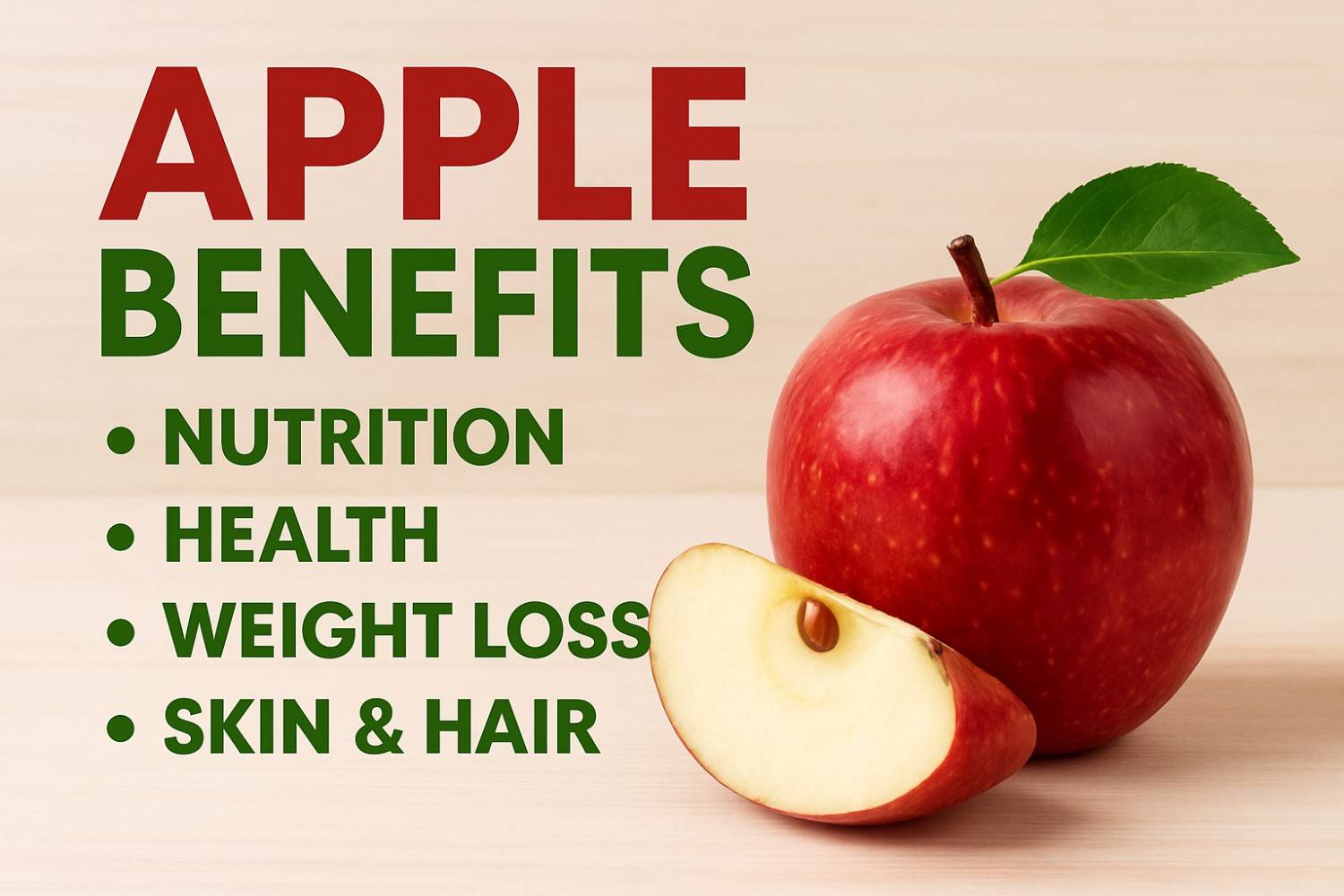
Apple Benefits: Nutrition, Health Benefits, Best Time to Eat & Side Effects
Apple is one of the most widely consumed and healthiest fruits in the world. It has a naturally sweet-tart taste and is packed with fiber, vitamins, minerals, and powerful antioxidants. Apples are widely grown in India (Himachal Pradesh, Kashmir, Uttarakhand) and countries like the USA and China.
This low-calorie fruit is easy to digest and highly beneficial when included in your daily diet. Popular apple varieties include Red Delicious, Fuji, Gala, and Granny Smith.
apple fruits, apple benefits, fruit fruits apple, apple juice
Nutritional Value of Apple (Per 100g)
| Nutrient | Amount |
|---|---|
| Calories | 52 kcal |
| Carbohydrates | 14 g |
| Fiber | 2.4 g |
| Protein | 0.3 g |
| Fat | 0.2 g |
| Natural Sugar | 10 g |
| Vitamin C | 14% DV |
| Vitamin A | 2% DV |
| Potassium | 107 mg |
| Antioxidants | High |
✔ Apples are nutrient-dense, high in fiber, and low in calories.
Health Benefits of Apple
1. Supports Weight Loss
Apples are rich in fiber and low in calories, helping you feel full for longer and reducing overeating.
2. Improves Digestion
Pectin, a soluble fiber in apples, promotes healthy gut bacteria and helps relieve constipation and bloating.
3. Promotes Heart Health
Regular apple consumption helps lower bad cholesterol (LDL) and reduces the risk of heart disease.
4. Controls Blood Sugar
Apples have a low glycemic index, making them safe for diabetics when eaten in controlled portions.
5. Boosts Immunity
Vitamin C and antioxidants strengthen the immune system and protect against infections.
6. Enhances Skin Glow
Antioxidants fight free radicals, reducing dullness, wrinkles, and premature aging.
7. Supports Hair Health
Biotin and vitamins improve scalp circulation and strengthen hair roots.
8. Aids Liver Detox
Apples help remove toxins and may reduce fat accumulation in the liver.
9. Improves Brain Health
Antioxidants protect brain cells from damage and may improve memory and focus.
10. May Reduce Cancer Risk
Flavonoids and polyphenols in apples help inhibit the growth of certain cancer cells.
Best Time to Eat Apple
✔ Morning (Empty Stomach): Best for digestion and detox
✔ After Workout: Provides instant natural energy
❌ Night: Not recommended for people with acidity or gas problems
Who Should Eat Apple?
- People aiming for weight loss
- Diabetic patients (in moderation)
- Heart patients
- Kids
- Pregnant women
- Students & working professionals
Who Should Limit Apple Intake?
- People with IBS (may cause bloating)
- Individuals with acid reflux
- Diabetics (control portion size)
- Anyone allergic to apples
Apple for Specific Health Issues
- Weight Loss: High fiber + low calories = ideal snack
- Diabetes: Low GI → prevents sugar spikes
- Skin & Hair: Vitamin C boosts collagen & hair strength
- Heart Health: Soluble fiber lowers cholesterol
- Digestion: Pectin improves gut health
- Liver Health: Supports detox & reduces fat buildup
Apple Recipes & Uses
- Apple juice
- Apple smoothie
- Apple salad
- Apple cinnamon tea
- Apple oatmeal
- Apple cider vinegar
- Raw apple as a healthy snack
How to Choose Good Apples
✔ Firm and not mushy
✔ Smooth skin without dents or bruises
✔ Bright natural color (red, green, or yellow)
✔ Avoid excessive wax coating
✔ Prefer local & seasonal apples
How to Store Apples
- Refrigerate → stays fresh 7–10 days
- Cut apples → dip in lemon water before storing
- Store in airtight containers
Apple Side Effects
- Excess sugar (important for diabetics)
- Bloating in sensitive individuals
- Acid reflux
- Pesticide residues (wash thoroughly)
- Too much fiber may cause stomach discomfort
Daily Recommended Quantity
- Adults: 1 apple daily
- Kids: ½ to 1 apple
- Weight Loss: Up to 2 apples per day
- Diabetes: 1 small apple after meals
FAQs About Apple
Q1. Can we eat apple at night?
Not recommended. It may cause acidity. Morning is best.
Q2. Is apple good for diabetes?
Yes, apples have a low glycemic index and are safe in moderation.
Q3. Can apple be eaten on an empty stomach?
Yes, it improves digestion and gut health.
Q4. Does apple help in weight loss?
Yes, high fiber and low calories make apples ideal for weight loss.
Q5. Apple or banana — which is better?
Apple is better for weight loss; banana is better for quick energy.