Ayurvedic Diet: Complete Guide to Eating According to Ayurveda
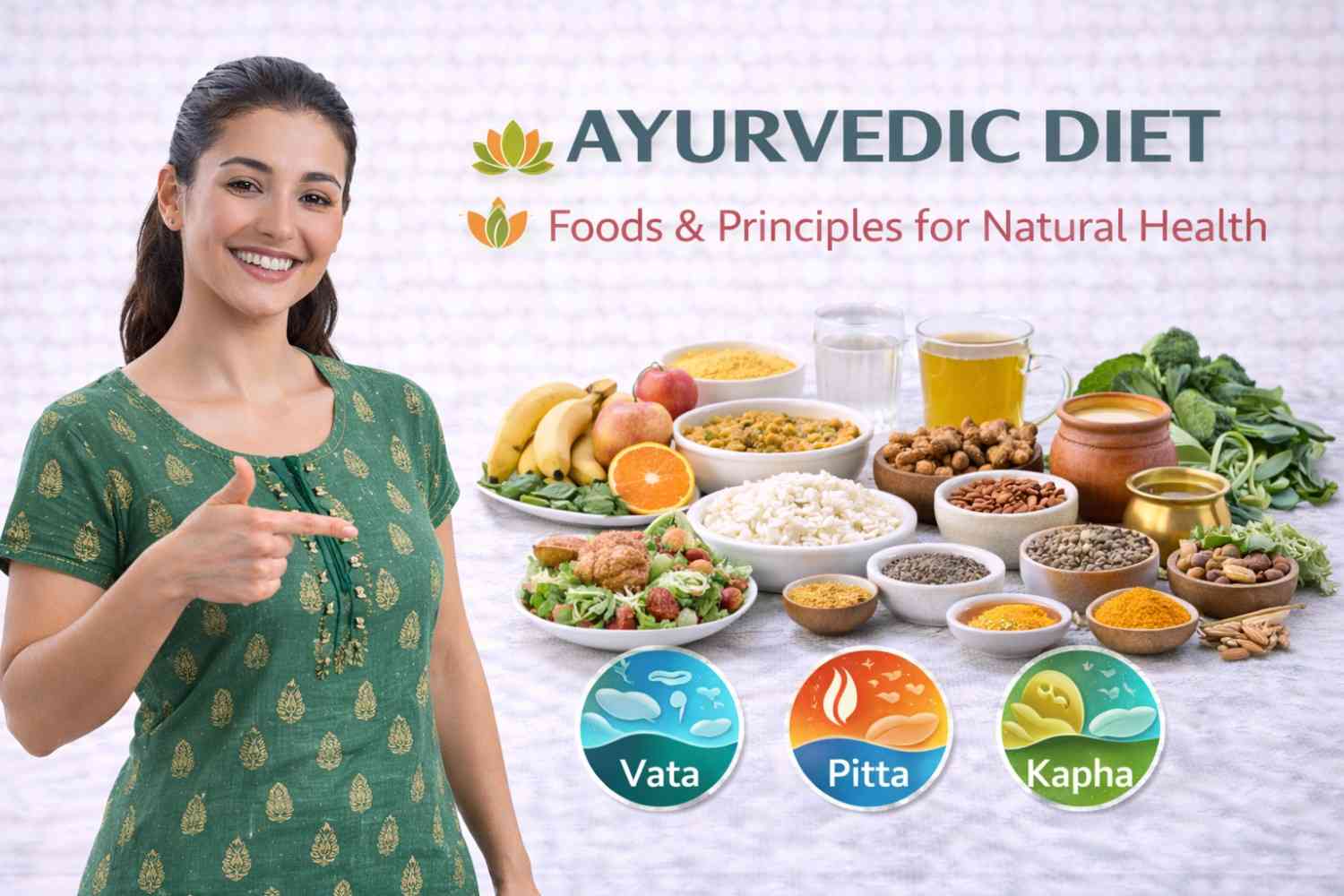
The Ayurvedic Diet is a traditional Indian way of eating based on Ayurveda, a 5,000-year-old natural healing system. Unlike modern diets, the Ayurvedic diet focuses on balance, digestion, body constitution (Dosha), and seasonal eating rather than calorie counting.
This diet helps improve digestion, immunity, metabolism, mental clarity, and overall well-being by aligning food with your body’s natural needs.
This complete guide explains what the Ayurvedic diet is, Dosha types, diet principles, best foods, foods to avoid, daily habits, and a sample Ayurvedic meal plan.
What Is the Ayurvedic Diet?
The Ayurvedic diet is based on:
- Your body type (Dosha)
- Digestive strength (Agni)
- Seasonal balance
- Fresh, natural, and whole foods
Ayurveda believes that food is medicine, and eating correctly can prevent disease and promote long life.
The Three Doshas in Ayurveda
Every person has a unique balance of these three energies:
1. Vata Dosha (Air + Space)
Traits: Thin body, dry skin, irregular appetite
Needs: Warm, moist, grounding foods
2. Pitta Dosha (Fire + Water)
Traits: Strong digestion, warm body, quick metabolism
Needs: Cooling, calming foods
3. Kapha Dosha (Earth + Water)
Traits: Heavier body, slow digestion, weight gain tendency
Needs: Light, warm, stimulating foods
Core Principles of Ayurvedic Diet
- Eat fresh, home-cooked food
- Eat according to hunger, not time
- Avoid overeating
- Eat in a calm environment
- Avoid incompatible food combinations
- Follow seasonal eating
Best Foods in Ayurvedic Diet
1. Whole Grains
- Rice
- Wheat
- Millets
✔ Easy digestion
✔ Sustained energy
2. Fresh Vegetables
- Bottle gourd
- Pumpkin
- Spinach
- Carrot
✔ Balance Doshas
✔ Improve digestion
3. Seasonal Fruits
- Apple
- Papaya
- Banana
- Pomegranate
✔ Natural vitamins
✔ Improve gut health
4. Dairy (Fresh & Moderate)
- Cow’s milk
- Homemade curd
- Ghee
✔ Strengthen immunity
✔ Improve digestion
5. Nuts & Seeds
- Almonds (soaked)
- Sesame seeds
✔ Nourish body tissues
6. Ayurvedic Spices
- Turmeric
- Cumin
- Coriander
- Ginger
- Fennel
✔ Improve digestion
✔ Reduce inflammation
Foods to Avoid in Ayurvedic Diet
🚫 Processed & packaged food
🚫 Cold & refrigerated food
🚫 Excess sugar
🚫 Deep-fried food
🚫 Carbonated drinks
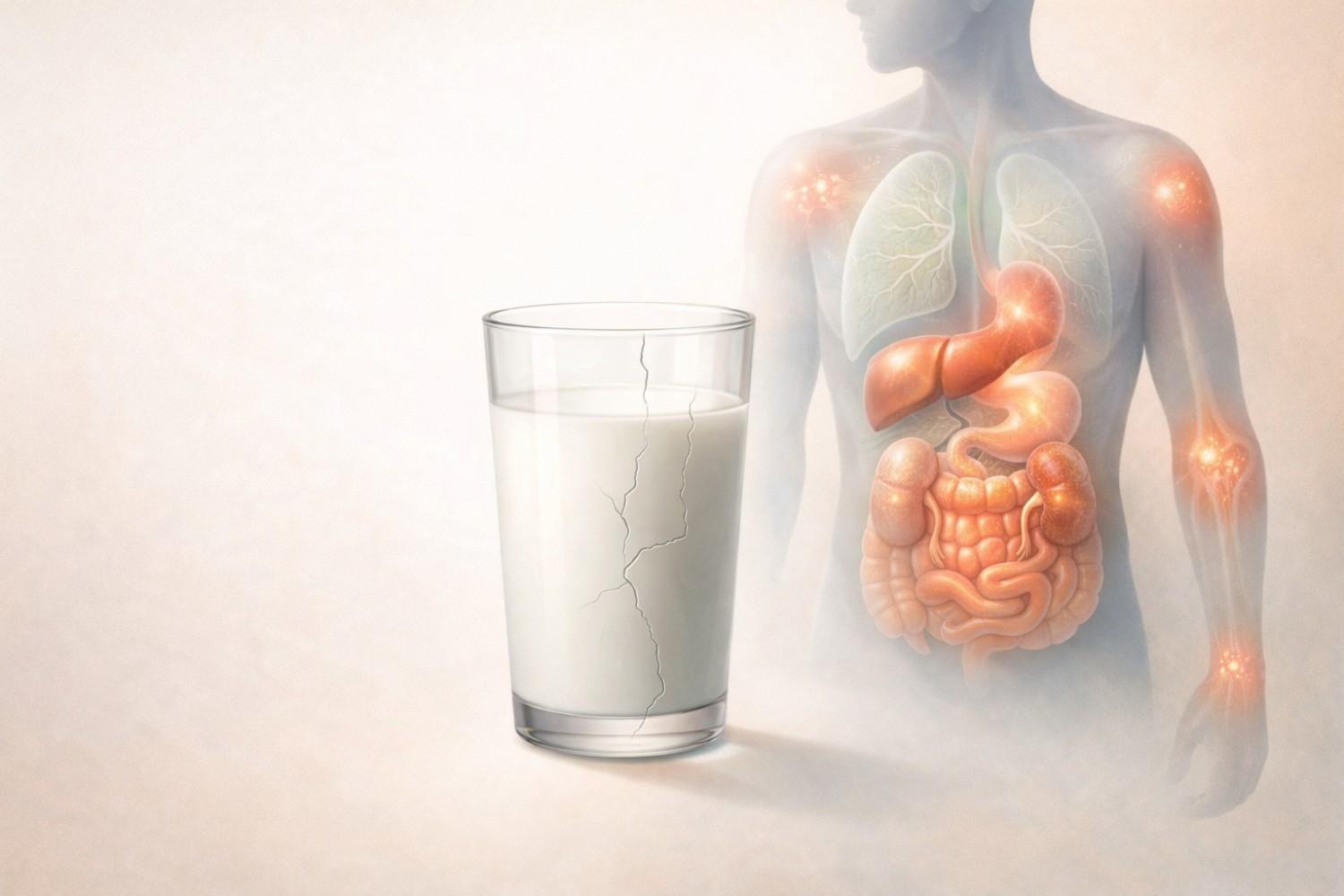
🚫 Incompatible food combinations (milk + fruit)
Ideal Ayurvedic Eating Routine
- Breakfast: Light & warm
- Lunch: Main and heaviest meal
- Dinner: Light and early
- Avoid late-night eating
Lifestyle Habits in Ayurveda
- Wake up early
- Practice yoga & pranayama
- Oil massage (Abhyanga)
- Adequate sleep
- Meditation for mental balance
Daily Ayurvedic Diet Plan
| Time | Meal |
|---|---|
| Morning | Warm water + soaked almonds |
| Breakfast | Porridge / fruit |
| Lunch | Rice + dal + sabzi + ghee |
| Evening | Herbal tea |
| Dinner | Soup + roti / khichdi |
Health Benefits of Ayurvedic Diet
- Strong digestion
- Better immunity
- Balanced weight
- Hormonal balance
- Clear skin
- Improved mental peace
FAQs About Ayurvedic Diet
Is Ayurvedic diet good for weight loss?
Yes, it balances digestion and metabolism naturally.
Can diabetics follow Ayurvedic diet?
Yes, with low-GI grains and doctor guidance.
Is non-veg allowed in Ayurveda?
Traditionally, vegetarian food is preferred.
How long does Ayurvedic diet take to show results?
Improvements are seen in 2–4 weeks.
Conclusion
The Ayurvedic diet is not a short-term plan — it is a holistic lifestyle.
By eating according to your Dosha, choosing fresh natural foods, and maintaining daily discipline, the Ayurvedic diet helps restore balance, prevent disease, and promote long-term health naturally.