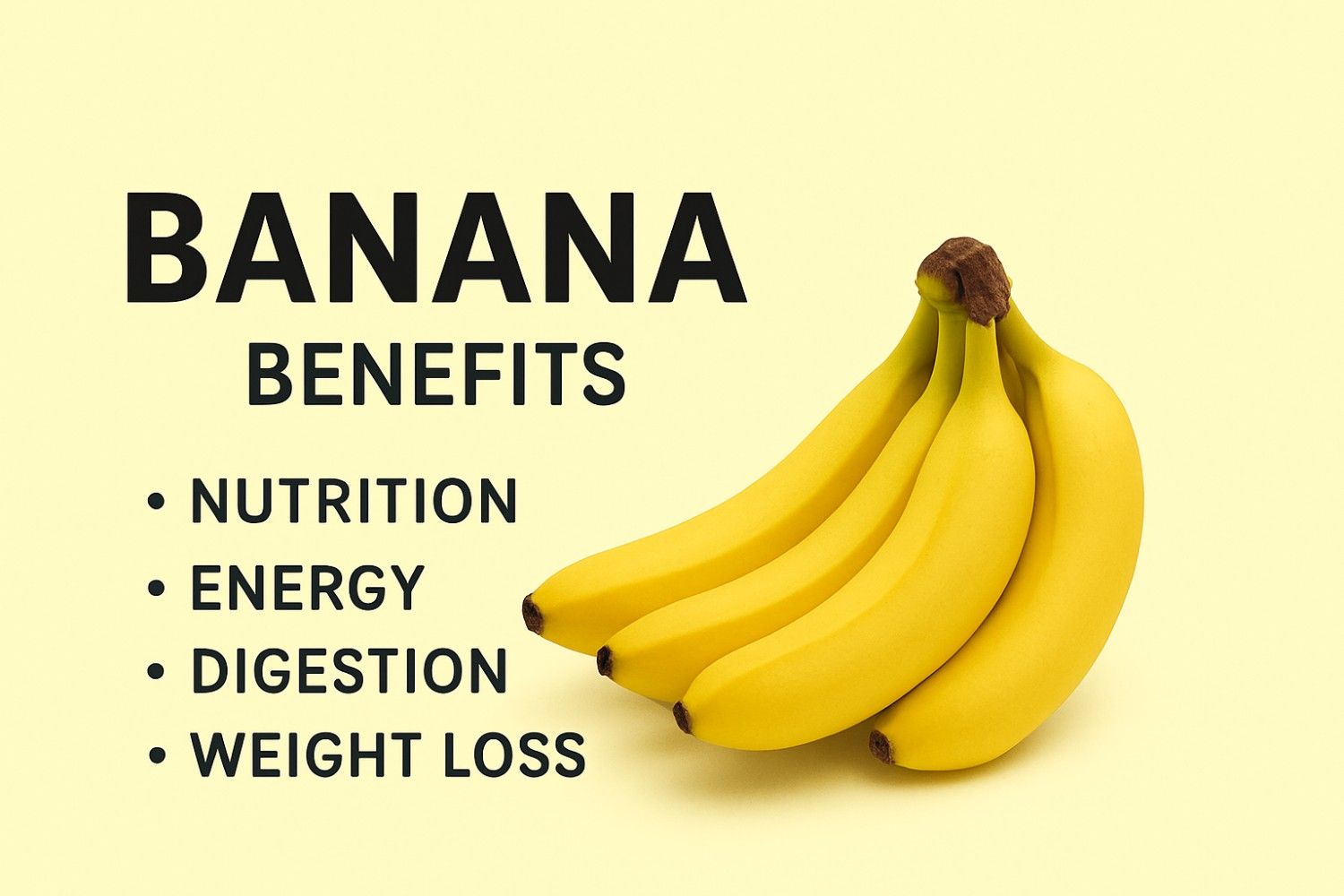
Banana Benefits: Nutrition, Health Benefits, Best Time to Eat & Side Effects
Banana is one of the most popular and nutritious fruits in the world. It is rich in natural energy, fiber, vitamins, and minerals, especially potassium. Bananas are easy to digest, budget-friendly, and available throughout the year, making them a perfect fruit for kids, athletes, pregnant women, and working professionals.
1 banana calories, banana leaf, banana prompts xyz, 2 banana calories, banana protein, banana flower, banana powder, red banana benefits, banana stem, banana hair mask, banana png, elaichi banana, banana club
Common banana varieties include Cavendish, Red Banana, Lady Finger, and Plantain.
Nutritional Value of Banana (Per 100g)
| Nutrient | Amount |
|---|---|
| Calories | 89 kcal |
| Carbohydrates | 23 g |
| Fiber | 2.6 g |
| Protein | 1.1 g |
| Fat | 0.3 g |
| Natural Sugar | 12 g |
| Potassium | 358 mg |
| Vitamin B6 | 20% DV |
| Vitamin C | 15% DV |
| Magnesium | 27 mg |
✔ Banana is energy-dense, rich in potassium, and gentle on digestion.
Health Benefits of Banana
1. Instant Energy Booster
Bananas contain natural sugars (glucose, fructose, sucrose) that provide quick and sustained energy, making them ideal for athletes and gym-goers.
2. Improves Digestion
Soluble fiber in bananas helps relieve constipation and supports smooth digestion.
3. Good for Heart Health
High potassium and low sodium help regulate blood pressure and reduce heart disease risk.
4. Supports Healthy Weight Gain
For underweight individuals, bananas help gain weight naturally, especially when eaten with milk or peanut butter.
5. Improves Mood & Reduces Stress
Bananas contain tryptophan, which helps increase serotonin — the feel-good hormone.
6. Strengthens Bones
Magnesium and potassium support bone strength and reduce calcium loss.
7. Good for Skin & Hair
Bananas hydrate skin, reduce acne, and strengthen hair roots due to vitamins B6 and C.
8. Helps Prevent Muscle Cramps
Potassium helps reduce muscle cramps during workouts or at night.
9. Regulates Blood Sugar (in Moderation)
Bananas release sugar slowly and are safe for diabetics when eaten in controlled portions.
Best Time to Eat Banana
✔ Morning: Best for digestion and energy
✔ Before Workout: Quick fuel
✔ After Workout: Restores electrolytes
✔ Night: Only if you don’t have acidity or gas issues
Who Should Eat Bananas?
- Kids
- Athletes & gym-goers
- Pregnant women
- People with constipation
- Underweight individuals
- High blood pressure patients
Who Should Avoid or Limit Bananas?
- Diabetics (limit quantity)
- People with acidity or gas problems
- Migraine patients (rare cases)
- Individuals with banana allergy
Banana for Specific Health Issues
- Weight Gain: Banana + milk = calorie-rich healthy combo
- Digestion: Gentle on stomach, relieves constipation
- Heart Health: Potassium controls blood pressure
- Skin & Hair: Vitamins B6, C improve glow & strength
- Energy: Excellent natural pre-workout fruit
Banana Recipes & Uses
- Banana shake
- Banana smoothie
- Banana oatmeal
- Banana pancakes
- Banana peanut butter sandwich
- Banana ice cream
- Banana chips
How to Choose Good Bananas
✔ Slightly yellow with small brown spots = perfect ripeness
✔ Avoid completely green or mushy bananas
✔ Red bananas are sweeter and richer in nutrients
✔ Smell should be natural, not fermented
How to Store Bananas
- Store at room temperature
- Wrap stems to slow ripening
- Refrigerate only when fully ripe (skin may darken, fruit stays fresh)
Side Effects of Banana
- Overeating may cause bloating
- Excess potassium may affect heart rate (rare)
- Can increase blood sugar if eaten in excess
- May worsen acidity in some people
Daily Recommended Quantity
- Adults: 1–2 bananas daily
- Kids: 1 banana
- Athletes: 2–3 bananas (around workouts)
- Diabetics: ½ to 1 small banana
FAQs About Banana
Q1. Are bananas good for weight loss?
Yes, when eaten in moderation due to high fiber.
Q2. Can diabetics eat bananas?
Yes, but in small portions and preferably semi-ripe bananas.
Q3. What is the best time to eat bananas?
Morning or before/after workouts.
Q4. Can we eat banana at night?
Yes, if you don’t have acidity or digestion issues.
Q5. Red banana or yellow banana — which is better?
Red bananas are sweeter and richer in antioxidants.