Grains & Cereals: Types, Benefits & Importance in a Balanced Diet
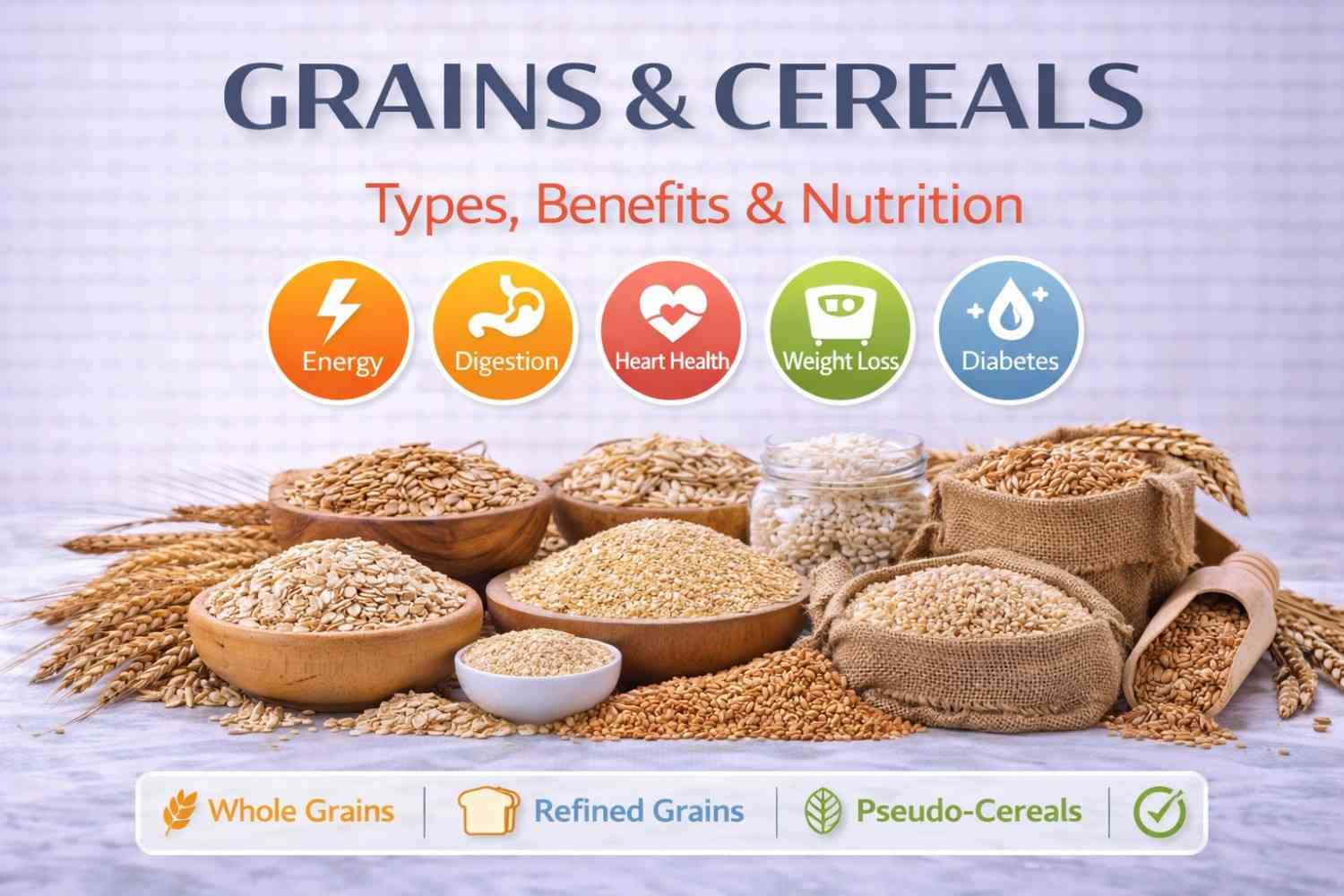
Grains and cereals are staple foods consumed worldwide. They are rich in carbohydrates, fiber, vitamins, minerals, and plant compounds that provide energy and support overall health.
Choosing the right type of grains plays a key role in digestion, heart health, weight management, and blood sugar control.
This complete guide explains what grains and cereals are, types, health benefits, best grains for different health goals, daily intake, and tips to choose healthy grains.
What Are Grains & Cereals?
Grains are the edible seeds of grass plants.
Each grain has three main parts:
- Bran (fiber-rich outer layer)
- Germ (nutrient-rich core)
- Endosperm (starchy energy source)
Cereals are grains used for food, either whole or processed.
Health Benefits of Grains & Cereals
- Provide long-lasting energy
- Improve digestion
- Support heart health
- Help in weight management
- Control blood sugar levels
- Reduce risk of chronic diseases
Types of Grains & Cereals
1. Whole Grains
Contain bran, germ, and endosperm.
Examples:
- Brown rice
- Oats
- Whole wheat
- Millets
- Barley
Benefits:
✔ High in fiber
✔ Better digestion
✔ Lower risk of heart disease
2. Refined Grains
Processed to remove bran and germ.
Examples:
- White rice
- White bread
- Refined flour (maida)
❌ Lower nutrition
❌ Blood sugar spikes
3. Pseudo-Cereals
Not true grains but used like grains.
Examples:
- Quinoa
- Buckwheat
- Amaranth
Benefits:
✔ High protein
✔ Gluten-free
Nutritional Value of Grains & Cereals
Grains provide:
- Complex carbohydrates
- Dietary fiber
- B vitamins
- Iron
- Magnesium
👉 Whole grains offer maximum nutrition.
Best Grains for Specific Health Goals
For Weight Loss
- Oats
- Barley
- Millets
For Diabetes
- Brown rice (controlled portion)
- Barley
- Quinoa
For Heart Health
- Oats
- Whole wheat
- Barley
For Energy & Fitness
- Rice
- Wheat
- Quinoa
Common Mistakes with Grains
🚫 Overconsumption of refined grains
🚫 Large portion sizes
🚫 Lack of variety
🚫 Ignoring whole grains
Best Time to Eat Grains
✔ Breakfast
✔ Lunch
✔ Pre-workout meals
🚫 Heavy grain meals late at night
How Much Grains Should You Eat Daily?
Recommended:
- 4–6 servings per day
👉 Balance grains with vegetables and protein.
Tips to Choose Healthy Grains
- Prefer whole grains over refined
- Read labels carefully
- Include millets & pseudo-cereals
- Control portion sizes
- Avoid heavily processed cereals
FAQs About Grains & Cereals
Are grains healthy?
Yes, especially whole grains.
Are cereals good for breakfast?
Choose whole-grain cereals with no added sugar.
Can grains cause weight gain?
Excess refined grains can; whole grains in moderation are healthy.
Are millets better than rice?
Millets are more fiber-rich and nutrient-dense.
Conclusion
Grains and cereals are essential energy-giving foods.
By choosing whole grains, millets, and pseudo-cereals, and limiting refined grains, you can improve digestion, support heart health, manage weight, and maintain long-term wellness.
Make grains smart and balanced, not excessive.