Herbs & Spices: Benefits, Types & Importance in a Healthy Diet
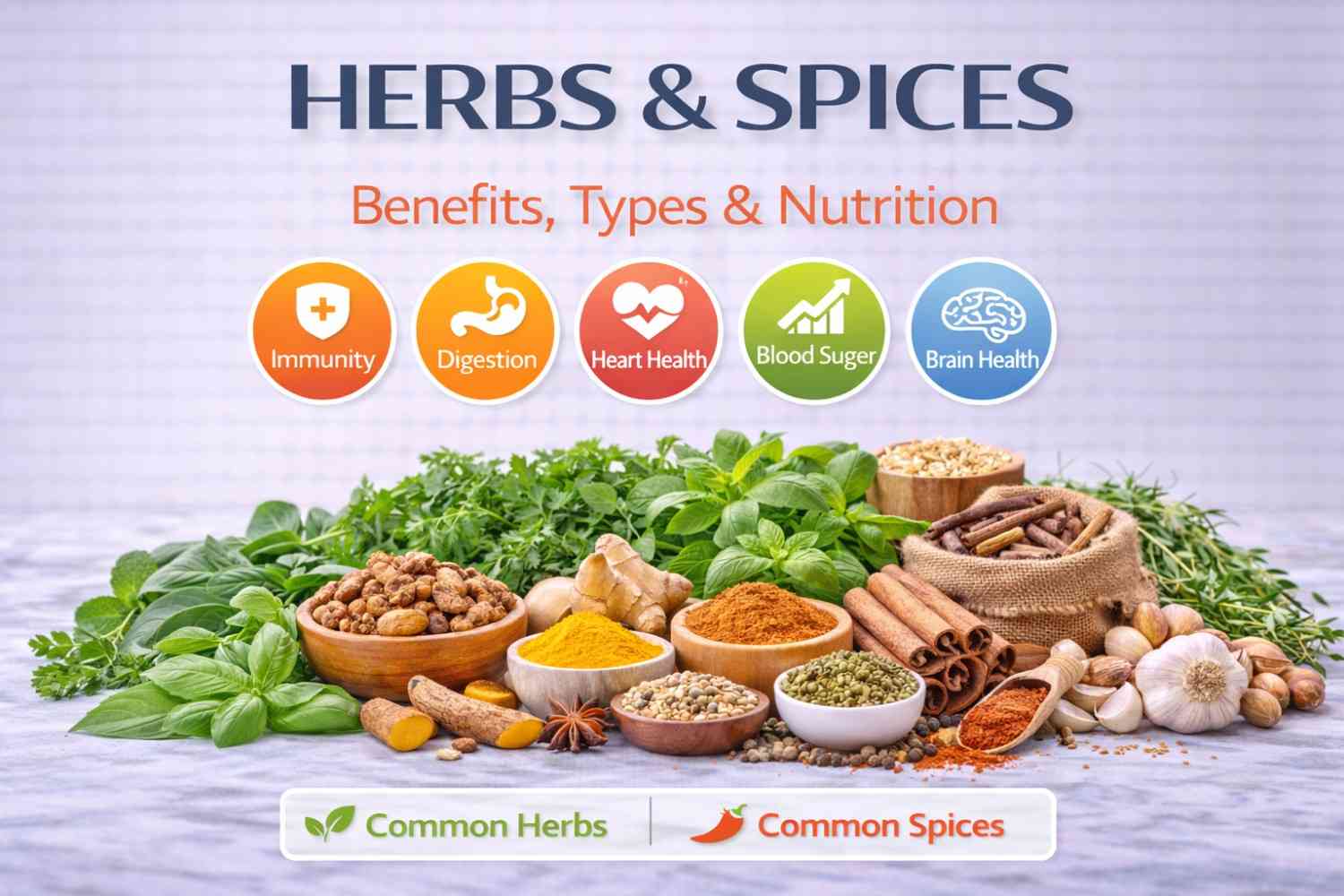
Herbs and spices are natural plant-based ingredients used for flavor, aroma, and medicinal benefits. For centuries, they have played a vital role in Ayurveda, traditional medicine, and everyday cooking.
Beyond taste, herbs and spices offer powerful antioxidant, anti-inflammatory, digestive, and immune-boosting properties.
This complete guide explains what herbs and spices are, their types, health benefits, best herbs and spices for specific health goals, daily usage tips, and precautions.
What Are Herbs & Spices?
- Herbs come from the leaves of plants (e.g., basil, mint, coriander).
- Spices come from other parts of plants such as roots, seeds, bark, flowers, or fruits (e.g., turmeric, cumin, cinnamon).
They are usually consumed in small quantities but provide big health benefits.
Health Benefits of Herbs & Spices
- Boost immunity
- Improve digestion
- Reduce inflammation
- Support heart health
- Help control blood sugar
- Improve brain function
- Enhance metabolism
Nutritional Value of Herbs & Spices
Herbs and spices contain:
- Antioxidants
- Essential oils
- Vitamins (A, C, K)
- Minerals (iron, calcium, magnesium)
- Bioactive compounds
👉 Even small amounts contribute to overall nutrition.
Common Types of Herbs
Popular Culinary Herbs
- Basil
- Mint
- Coriander leaves
- Parsley
- Curry leaves
Benefits:
✔ Improve digestion
✔ Refresh breath
✔ Support detox
Common Types of Spices
Popular Spices
- Turmeric
- Cumin
- Black pepper
- Ginger
- Cinnamon
- Cloves
- Cardamom
Benefits:
✔ Anti-inflammatory
✔ Improve immunity
✔ Aid digestion
Best Herbs & Spices for Specific Health Goals
For Immunity
- Turmeric
- Ginger
- Garlic
- Black pepper
For Digestion
- Cumin
- Fennel
- Ajwain
- Ginger
For Heart Health
- Garlic
- Cinnamon
- Turmeric
For Blood Sugar Control
- Cinnamon
- Fenugreek seeds
For Brain Health
- Turmeric
- Sage
Common Mistakes While Using Herbs & Spices
🚫 Overuse of spices
🚫 Using old, stale spices
🚫 Excess spicy food
🚫 Ignoring quality and freshness
Best Way to Use Herbs & Spices
- Use fresh herbs whenever possible
- Dry roast spices lightly for better flavor
- Store spices in airtight containers
- Combine spices wisely for better absorption (e.g., turmeric + black pepper)
How Much Herbs & Spices Should You Use Daily?
- Use small to moderate amounts
- Balance flavor with digestion
- Avoid excessive spice intake if you have acidity or ulcers
Precautions
- Pregnant women should consult before medicinal use
- Excess spices may cause acidity
- Avoid contaminated or adulterated spices
FAQs About Herbs & Spices
Are herbs and spices good for daily use?
Yes, in moderate amounts.
Do herbs and spices have medicinal value?
Yes, many have proven therapeutic benefits.
Can herbs and spices help in weight loss?
Yes, they boost metabolism and digestion.
Are fresh herbs better than dried?
Fresh herbs have higher nutrient content.
Conclusion
Herbs and spices are nature’s medicine cabinet.
When used correctly, they not only enhance taste but also support digestion, immunity, heart health, and overall wellness. Including a variety of herbs and spices in your daily meals is a simple and effective way to improve long-term health naturally.