Migraine: Best Foods, Diet & Natural Ways to Get Migraine Relief
Migraine is a neurological disorder, not just a normal headache. It causes intense, recurring head pain that is often accompanied by nausea, vomiting, and extreme sensitivity to light, sound, and even smell. Migraine attacks can last from a few hours to several days, making daily activities extremely difficult.
People suffering from migraine often feel exhausted, irritable, and mentally drained, and frequent attacks can reduce work productivity and quality of life. Migraine is commonly triggered by stress, poor sleep, dehydration, hormonal changes, skipping meals, and certain foods.
Although migraine is a chronic condition, the good news is that its frequency and severity can be reduced naturally with the right diet, healthy food choices, proper hydration, stress management, and consistent daily habits.
This complete guide explains what migraine is, its causes and triggers, health problems caused by migraine, best foods, foods to avoid, daily habits, and a 7-day migraine-friendly diet plan.
migraine headache, migraine tablet, migraine symptoms in hindi, migraine specialists, is migraine dangerous, 5 tips for instant migraine relief, migraine in hindi, how to cure migraine permanently
What Is Migraine?
Migraine is a brain-related neurological condition that affects nerve pathways and blood flow in the brain. During a migraine attack, changes occur in brain chemicals and blood vessels, leading to severe pain and sensory sensitivity.
Unlike tension headaches, migraine pain is usually:
- Throbbing or pulsating
- Often on one side of the head
- Associated with nausea and sensory sensitivity
Some people experience aura before a migraine, which includes visual disturbances like flashing lights or blurred vision.
Common Migraine Symptoms
Migraine symptoms vary from person to person but commonly include:
- Throbbing or pounding headache
- Nausea or vomiting
- Sensitivity to light, sound, and smell
- Blurred vision or visual disturbances
- Fatigue and weakness
- Difficulty concentrating
These symptoms can make even simple tasks difficult during an attack.
Major Causes & Triggers of Migraine
Migraine attacks are usually triggered by internal or external factors.
Common Migraine Triggers Include:
- Stress and anxiety
- Lack of sleep or irregular sleep patterns
- Dehydration
- Skipping meals
- Hormonal changes (especially in women)
- Excess caffeine or caffeine withdrawal
- Certain foods (chocolate, processed foods, aged cheese)
- Excess screen time
Identifying and avoiding personal triggers plays a major role in migraine prevention.
Health Problems Caused by Migraine
Frequent migraine attacks can affect both physical and mental health.
1. Severe Head Pain & Reduced Productivity
Problems:
- Difficulty concentrating
- Missed work or daily activities
Why It Happens:
Pain signals overload the nervous system.
Helpful Foods:
- Magnesium-rich foods
- Regular, balanced meals
2. Nausea & Digestive Discomfort
Problems:
- Vomiting
- Loss of appetite
Why It Happens:
Migraine affects gut–brain connection.
Helpful Foods:
- Ginger
- Light, easy-to-digest foods
- Herbal teas
3. Sleep Disturbance
Problems:
- Poor sleep quality
- Insomnia
Why It Happens:
Migraine disrupts brain sleep chemicals.
Helpful Foods:
- Tryptophan-rich foods
- Warm milk
4. Stress & Anxiety
Problems:
- Mental exhaustion
- Mood swings
Why It Happens:
Chronic pain increases stress hormones.
Helpful Foods:
- Omega-3 rich foods
- Magnesium-rich foods
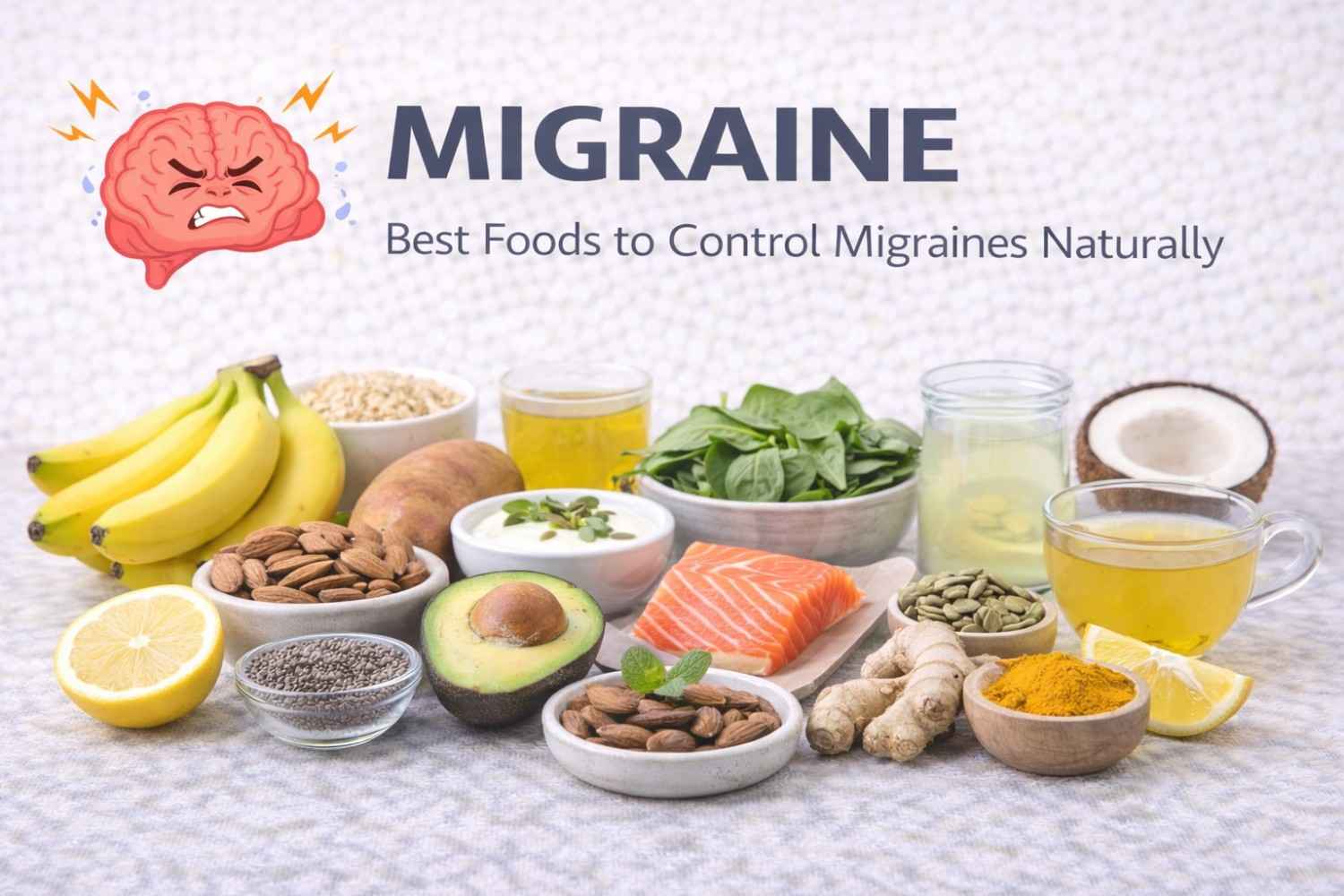
Best Foods for Migraine Relief
The right foods help calm the nervous system, reduce inflammation, and prevent migraine triggers.
1. Magnesium-Rich Foods
Magnesium relaxes blood vessels and nerves.
Best Options:
- Spinach
- Almonds
- Pumpkin seeds
✔ Reduce migraine frequency
✔ Relax brain blood vessels
2. Anti-Inflammatory Foods
Reduce brain inflammation and pain signals.
Best Options:
- Ginger
- Turmeric
- Green leafy vegetables
✔ Reduce headache intensity
✔ Improve circulation
3. Omega-3 Rich Foods
Omega-3 fats support brain health.
Best Options:
- Fatty fish
- Flax seeds
- Chia seeds
✔ Reduce brain inflammation
✔ Support nerve function
4. Potassium-Rich Foods
Prevent dehydration-related headaches.
Best Options:
- Banana
- Sweet potato
✔ Maintain electrolyte balance
✔ Prevent migraine triggers
5. Hydrating & Soothing Foods
Maintain fluid and mineral balance.
Best Options:
- Yogurt
- Buttermilk
- Coconut water
✔ Prevent dehydration
✔ Calm digestion
Best Drinks for Migraine Relief
✔ Plain water
✔ Coconut water
✔ Ginger tea
✔ Herbal teas
🚫 Avoid excess coffee, energy drinks, and sugary beverages
Foods to Avoid in Migraine
Some foods are known migraine triggers.
🚫 Chocolate
🚫 Processed foods
🚫 Aged cheese
🚫 Excess caffeine
🚫 Artificial sweeteners
🚫 Alcohol
Avoiding trigger foods can significantly reduce migraine attacks.
Daily Habits to Prevent Migraine Attacks
Lifestyle habits are extremely important for migraine control.
- Maintain a regular sleep schedule
- Eat meals on time (avoid skipping meals)
- Stay well hydrated
- Manage stress through yoga or meditation
- Limit screen time and eye strain
- Avoid known trigger foods
- Maintain a daily routine
Consistency in these habits reduces migraine frequency and severity.
7-Day Migraine-Friendly Diet Plan
| Day | Breakfast | Lunch | Evening | Dinner |
|---|---|---|---|---|
| Monday | Oats + banana | Roti + dal + sabzi | Coconut water | Soup |
| Tuesday | Smoothie | Brown rice + veg | Nuts | Paneer + salad |
| Wednesday | Eggs / paneer | Roti + chole | Ginger tea | Veg curry |
| Thursday | Fruit bowl | Veg pulao | Herbal tea | Soup |
| Friday | Oats + yogurt | Roti + rajma | Fruit | Paneer bhurji |
| Saturday | Idli | Veg thali | Green tea | Salad |
| Sunday | Eggs / paneer | Veg biryani | Nuts | Light dinner |
FAQs About Migraine
Which food helps reduce migraine pain?
Magnesium-rich foods, ginger, omega-3 rich foods, and hydrating foods help reduce migraine pain.
Is coffee good or bad for migraine?
Small amounts may help some people, but excess caffeine can trigger migraines.
Can migraine be cured naturally?
Migraine cannot be completely cured, but attacks can be significantly reduced with diet and lifestyle changes.
Does dehydration cause migraine?
Yes. Dehydration is one of the most common migraine triggers.
Conclusion
Migraine is a chronic condition, but it does not have to control your life. With the right food choices, proper hydration, stress management, and healthy daily habits, migraine attacks can be reduced in frequency and severity.
Early lifestyle changes improve brain health, reduce pain episodes, and enhance overall quality of life.