Vegetables: Health Benefits, Types & Importance in a Healthy Diet
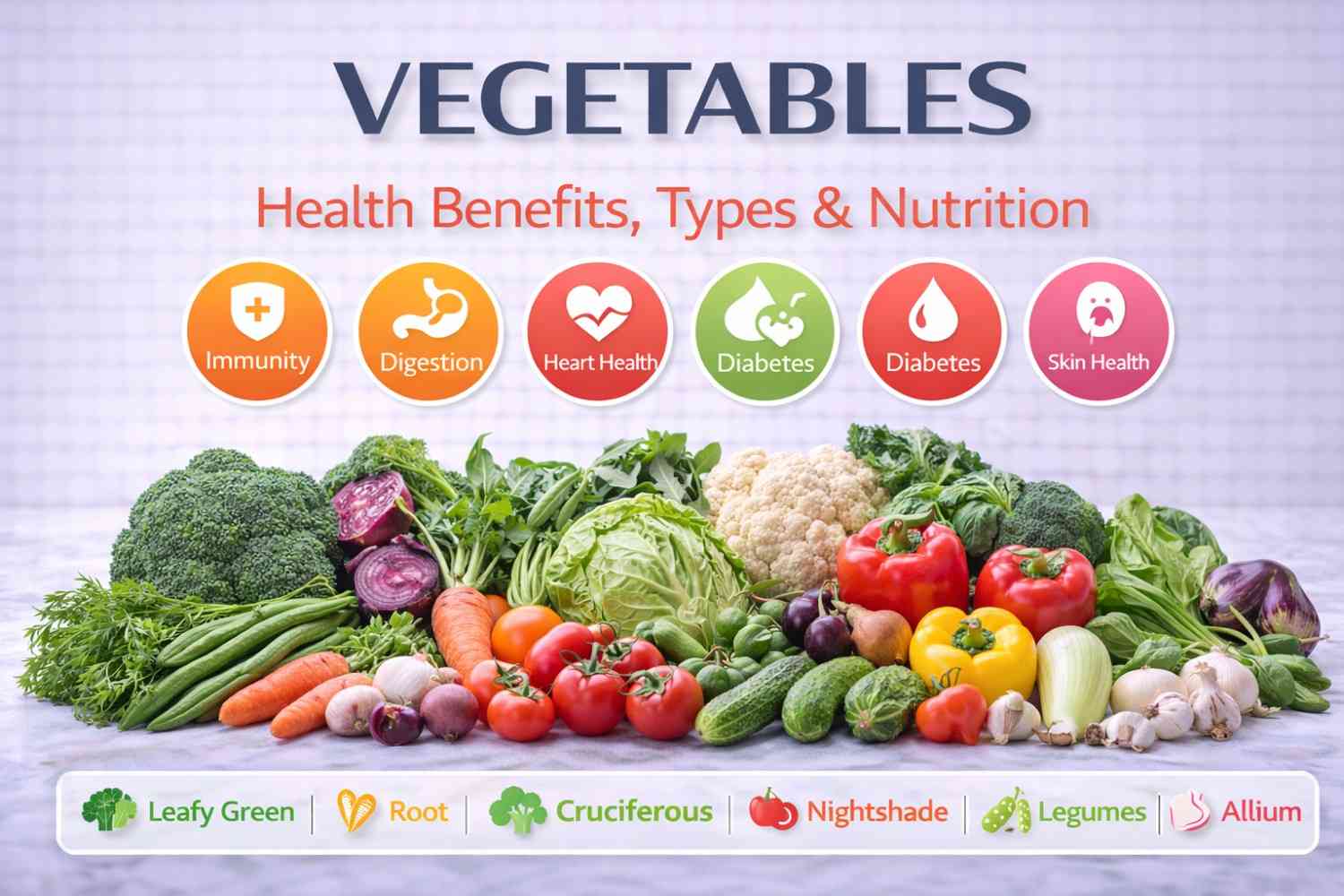
Vegetables are a foundation of a healthy diet. They are rich in vitamins, minerals, fiber, antioxidants, and phytonutrients that support overall health and help prevent many diseases.
Regular vegetable intake improves immunity, digestion, heart health, weight management, and skin health.
This complete guide explains what vegetables are, types of vegetables, health benefits, best vegetables for different health goals, daily intake, and tips to eat vegetables correctly.
What Are Vegetables?
Vegetables are edible parts of plants, including:
- Leaves
- Roots
- Stems
- Flowers
- Fruits (botanical)
They are generally low in calories and high in nutrients, making them ideal for daily consumption.
Health Benefits of Eating Vegetables
- Boost immunity
- Improve digestion
- Support heart health
- Help in weight loss
- Control blood sugar
- Improve skin & hair health
- Reduce inflammation
Types of Vegetables
1. Leafy Green Vegetables
- Spinach
- Kale
- Lettuce
- Fenugreek
Benefits:
✔ Rich in iron & folate
✔ Improve blood health
2. Root Vegetables
- Carrot
- Beetroot
- Radish
- Sweet potato
Benefits:
✔ High in fiber
✔ Support digestion
3. Cruciferous Vegetables
- Broccoli
- Cabbage
- Cauliflower
Benefits:
✔ Detoxification
✔ Cancer-protective compounds
4. Nightshade Vegetables
- Tomato
- Brinjal
- Bell peppers
Benefits:
✔ Rich in antioxidants
✔ Support heart health
5. Legumes (Vegetable Group)
- Peas
- Beans
- Lentils
Benefits:
✔ Protein + fiber
✔ Blood sugar control
6. Allium Vegetables
- Onion
- Garlic
- Leeks
Benefits:
✔ Boost immunity
✔ Anti-inflammatory properties
Nutritional Value of Vegetables
Vegetables provide:
- Vitamins (A, C, K, B-complex)
- Minerals (iron, potassium, magnesium)
- Fiber
- Antioxidants
👉 Vegetables are nutrient-dense and low-calorie foods.
Best Vegetables for Specific Health Goals
For Immunity
- Spinach
- Broccoli
- Garlic
For Weight Loss
- Cucumber
- Bottle gourd
- Leafy greens
For Heart Health
- Tomato
- Carrot
- Broccoli
For Diabetes
- Bitter gourd
- Okra
- Cabbage
For Diabetes
- Bitter gourd
- Okra
- Cabbage
Common Mistakes While Eating Vegetables
🚫 Overcooking vegetables
🚫 Avoiding variety
🚫 Relying only on starchy vegetables
🚫 Skipping vegetables in meals
Best Time to Eat Vegetables
✔ Lunch & dinner
✔ As salads or soups
✔ As snacks (steamed/roasted)
How Much Vegetables Should You Eat Daily?
Recommended:
- 3–5 servings per day
👉 Half your plate should ideally be vegetables.
Daily Tips to Eat Vegetables the Healthy Way
- Eat seasonal vegetables
- Use minimal cooking
- Include different colors
- Wash properly before use
- Combine raw and cooked vegetables
FAQs About Vegetables
Are vegetables better raw or cooked?
Both are beneficial; balance is best.
Can vegetables help with weight loss?
Yes, they are low-calorie and filling.
Are frozen vegetables healthy?
Yes, if minimally processed.
Which vegetables are richest in nutrients?
Leafy greens and cruciferous vegetables.
Conclusion
Vegetables are essential for long-term health and disease prevention.
A diet rich in a variety of colorful vegetables ensures adequate intake of vitamins, minerals, fiber, and antioxidants.
Make vegetables a daily habit, not an occasional choice.