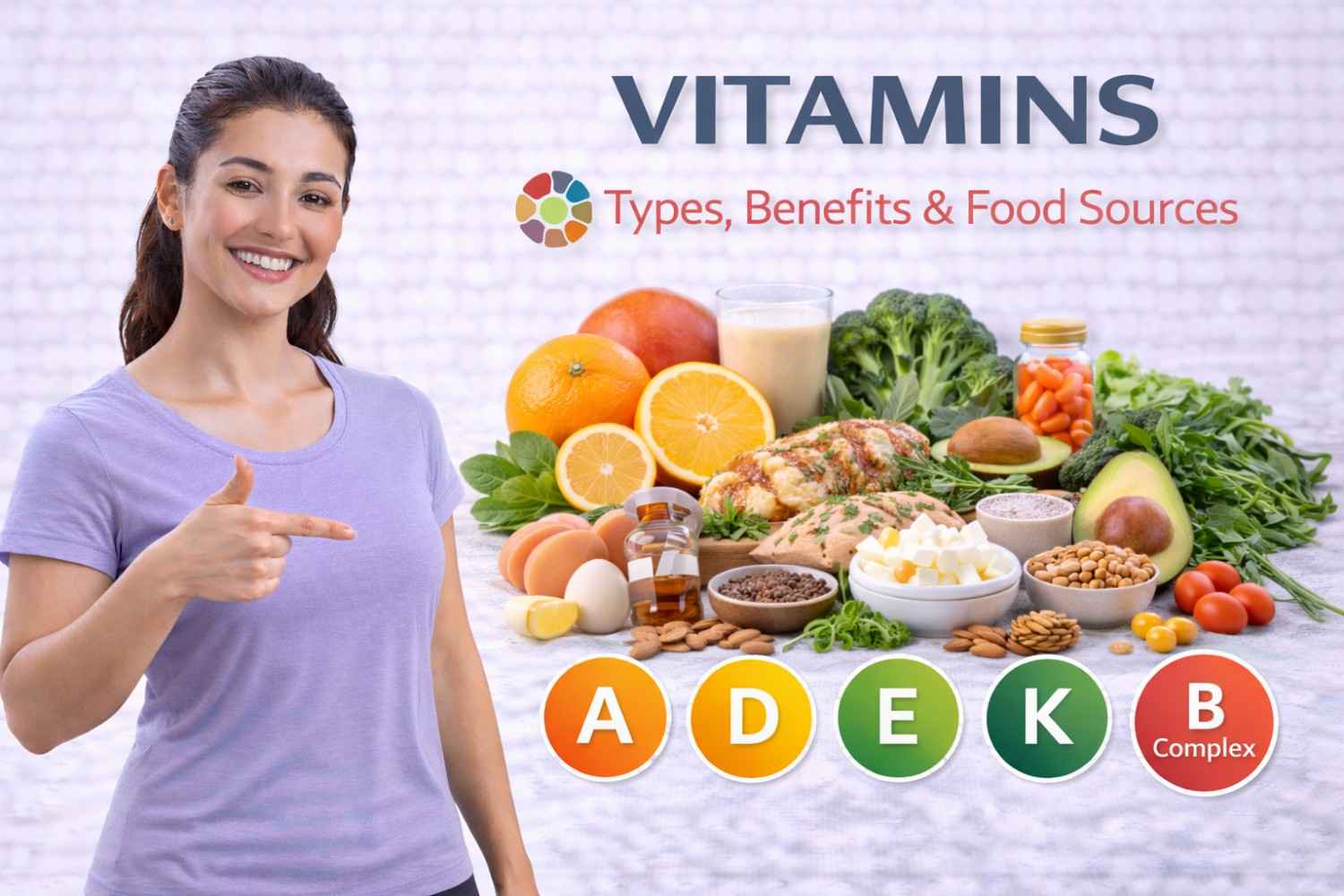
Vitamins: Types, Benefits, Food Sources & Importance for Health
Vitamins are essential nutrients that the body needs in small amounts to function properly. They play a vital role in immunity, energy production, brain function, skin health, bone strength, and overall growth.
Since the body cannot produce most vitamins on its own, they must be obtained from a balanced diet.
This complete guide explains what vitamins are, types of vitamins, benefits, food sources, deficiency symptoms, and daily intake tips.
What Are Vitamins?
Vitamins are organic compounds required for:
- Growth & development
- Metabolism
- Immune system function
- Cell repair
- Disease prevention
Lack of vitamins can lead to fatigue, weak immunity, poor skin, hair fall, bone weakness, and chronic health problems.
Types of Vitamins
Vitamins are classified into two main groups:
1. Water-Soluble Vitamins
These dissolve in water and are not stored in the body for long.
Includes:
- Vitamin B-complex (B1, B2, B3, B5, B6, B7, B9, B12)
- Vitamin C
👉 Must be consumed regularly.
2. Fat-Soluble Vitamins
These dissolve in fat and are stored in body tissues.
Includes:
- Vitamin A
- Vitamin D
- Vitamin E
- Vitamin K
👉 Excess intake should be avoided.
Major Vitamins, Benefits & Food Sources
Vitamin A
Benefits:
- Improves eyesight
- Supports skin & immunity
Food Sources:
- Carrot
- Sweet potato
- Spinach
- Mango
Deficiency Symptoms:
- Night blindness
- Dry skin
Vitamin D
Benefits:
- Strengthens bones
- Improves immunity
Food Sources:
- Sunlight
- Milk
- Egg yolk
- Fish
Deficiency Symptoms:
- Bone pain
- Weak muscles
Vitamin E
Benefits:
- Antioxidant
- Improves skin & hair
Food Sources:
- Almonds
- Sunflower seeds
- Spinach
Deficiency Symptoms:
- Muscle weakness
- Dry skin
Vitamin K
Benefits:
- Blood clotting
- Bone health
Food Sources:
- Green leafy vegetables
- Broccoli
Deficiency Symptoms:
- Excess bleeding
Vitamin C
Benefits:
- Boosts immunity
- Improves skin glow
- Helps wound healing
Food Sources:
- Orange
- Lemon
- Amla
- Guava
Deficiency Symptoms:
- Frequent infections
- Bleeding gums
Vitamin B-Complex
Vitamin B1 (Thiamine)
- Energy production
- Nervous system support
- Sources: Whole grains, nuts
Vitamin B6
- Brain health
- Hormone balance
- Sources: Banana, chickpeas
Vitamin B9 (Folate)
- Red blood cell formation
- Pregnancy support
- Sources: Spinach, lentils
Vitamin B12
- Nerve health
- Prevents anemia
- Sources: Milk, eggs, fish
Deficiency Symptoms (B-complex):
- Fatigue
- Hair fall
- Anemia
- Mood changes
Common Health Problems Due to Vitamin Deficiency
- Weak immunity
- Low energy
- Hair fall & skin problems
- Bone weakness
- Poor concentration
- Delayed wound healing
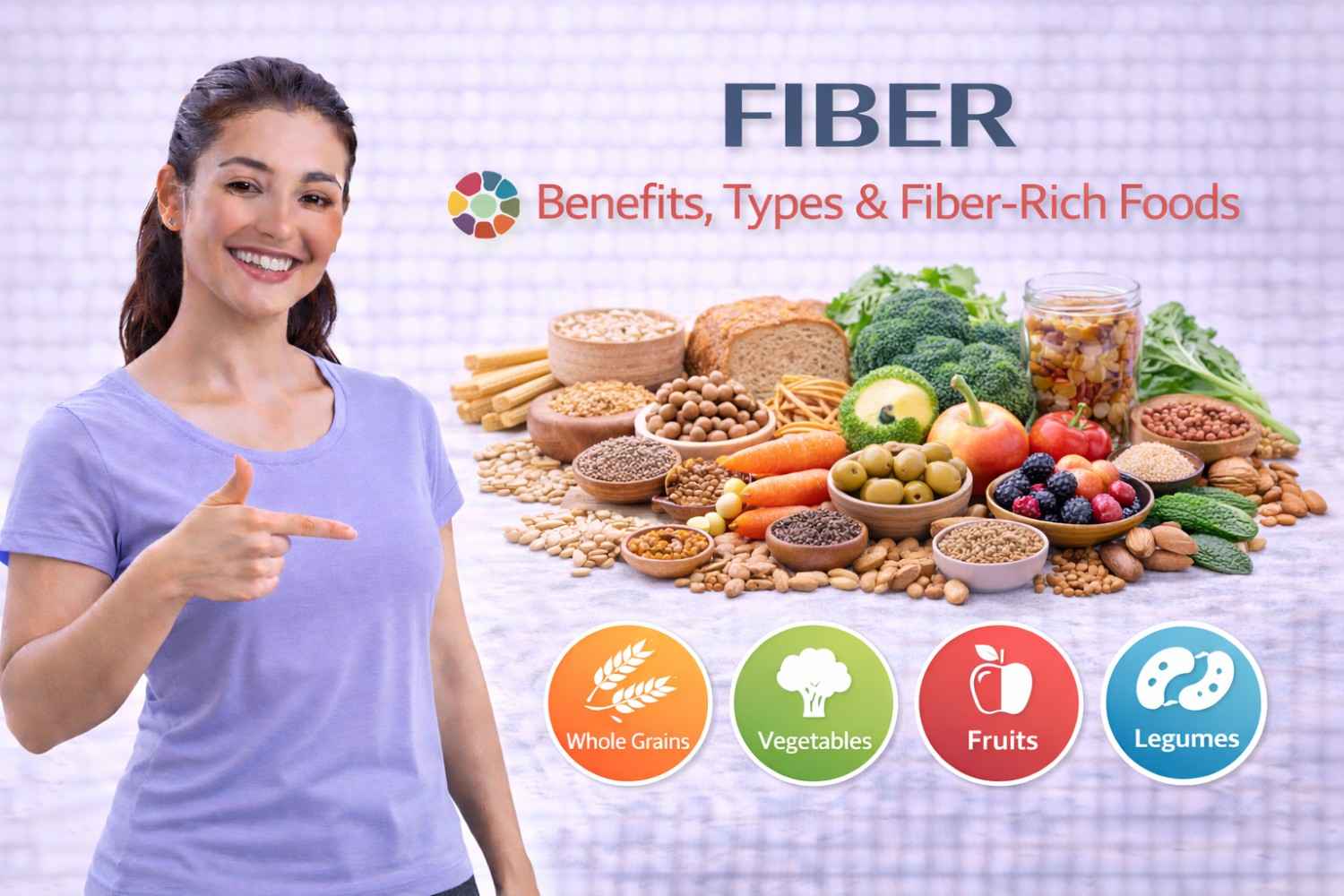
Best Foods Rich in Vitamins
- Fruits & vegetables
- Dairy products
- Nuts & seeds
- Whole grains
- Eggs & fish
👉 A colorful plate usually means better vitamin intake.
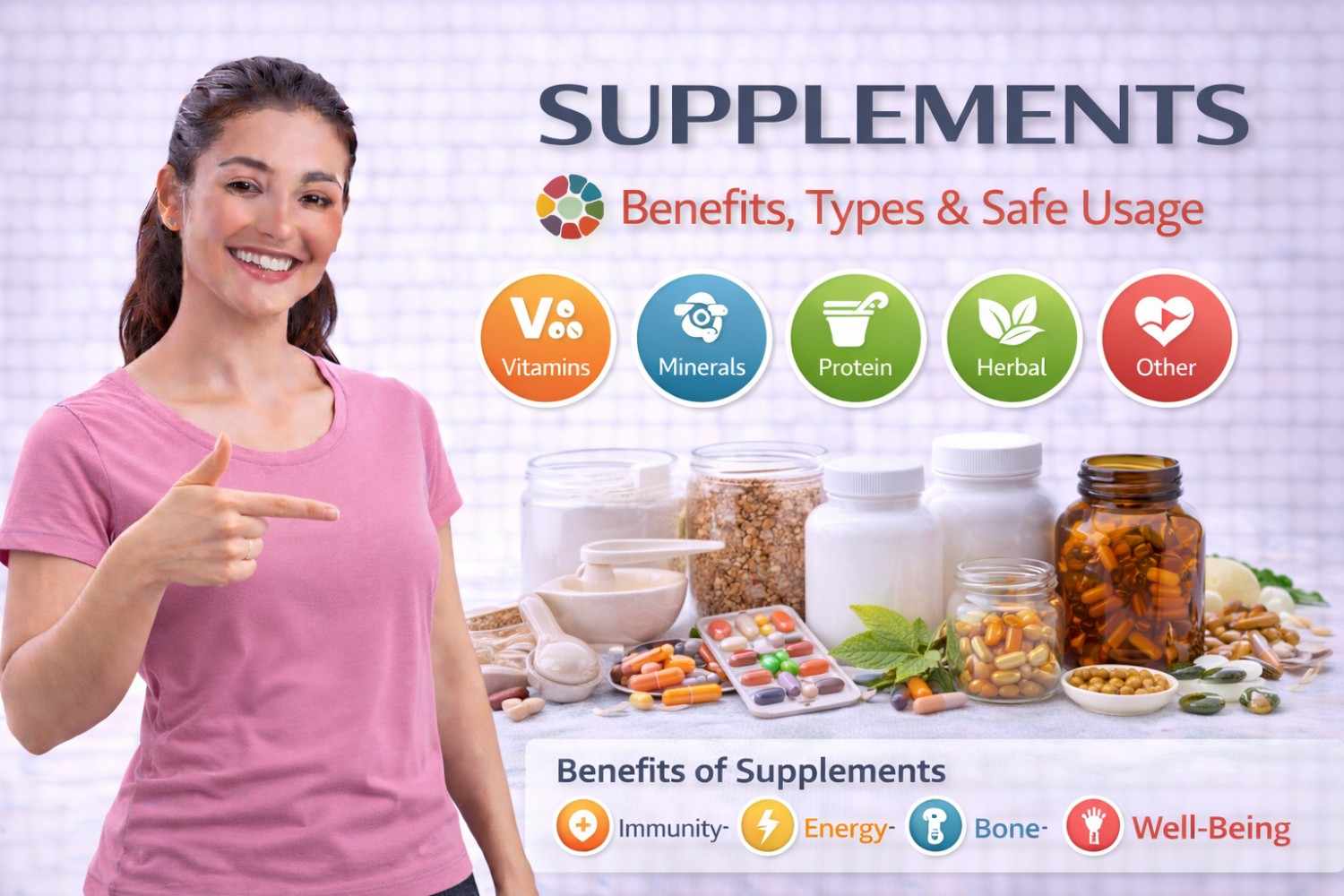
Do You Need Vitamin Supplements?
Supplements may be needed if:
- Diet is poor
- Medical deficiency exists
- Pregnancy or old age
- Limited sun exposure
🚫 Avoid self-medication; consult a doctor.
Daily Tips to Improve Vitamin Intake
- Eat fresh seasonal fruits & vegetables
- Avoid overcooking food
- Get regular sunlight
- Include healthy fats for fat-soluble vitamins
- Maintain a balanced diet
FAQs About Vitamins
Are vitamins necessary daily?
Yes, especially water-soluble vitamins.
Can excess vitamins be harmful?
Yes, especially fat-soluble vitamins.
Are natural food vitamins better than supplements?
Yes, natural food sources are always preferred.
Which vitamin boosts immunity the most?
Vitamin C, D, and A play key roles.
Conclusion
Vitamins are essential for life and long-term health.
A balanced diet rich in fruits, vegetables, whole grains, and healthy fats ensures proper vitamin intake, helping prevent diseases, boost immunity, improve energy levels, and maintain overall wellness.