Watermelon Benefits: Nutrition, Health Benefits, Best Time to Eat & Side Effects
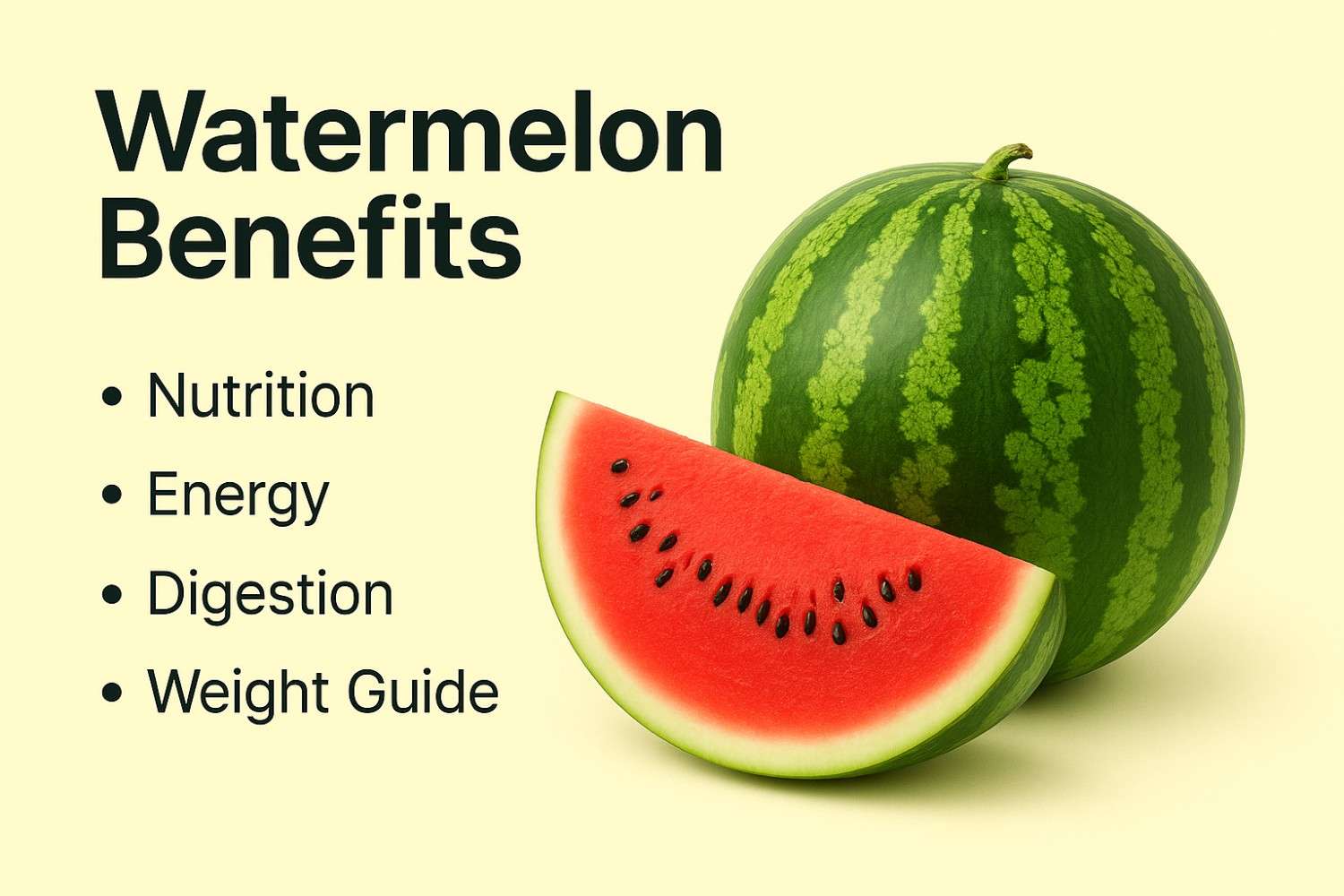
Watermelon is one of the most refreshing and healthy fruits, especially during summer. It contains about 92% water, which makes it excellent for hydration, cooling the body, and preventing dehydration. Along with water, watermelon provides essential vitamins, minerals, antioxidants, and natural sugars that support overall health.
Watermelon is low in calories, easy to digest, and suitable for people of all age groups. When eaten at the right time and in the right quantity, it supports hydration, digestion, heart health, skin glow, energy levels, and weight management.
This complete guide explains watermelon nutrition, health benefits, best time to eat, daily quantity, side effects, and common questions.
What Is Watermelon?
Watermelon is a summer fruit with a green outer rind and juicy red or yellow flesh inside. It belongs to the gourd family and is scientifically known as Citrullus lanatus. The fruit is naturally sweet and contains seeds, although seedless varieties are also available.
Because of its high water content and light nature, watermelon is considered one of the best fruits for hot weather.
Nutritional Value of Watermelon (Per 100g)
| Nutrient | Amount |
|---|---|
| Calories | 30 kcal |
| Water | 92% |
| Carbohydrates | 8 g |
| Fiber | 0.4 g |
| Natural Sugar | 6 g |
| Protein | 0.6 g |
| Vitamin C | 8.1 mg |
| Vitamin A | 569 IU |
| Potassium | 112 mg |
| Lycopene | 4,532 mcg |
Watermelon is low-calorie, high-water, and rich in antioxidants, making it suitable for daily consumption in moderation.
Health Benefits of Watermelon
1. Helps Keep the Body Hydrated
Watermelon contains a very high amount of water, which:
- Prevents dehydration
- Maintains fluid balance
- Keeps the body cool
- Reduces the risk of heat exhaustion
This makes watermelon an ideal fruit during summer and hot climates.
2. Supports Heart Health
Watermelon contains lycopene, potassium, and citrulline, which help:
- Improve blood circulation
- Control blood pressure
- Reduce cholesterol buildup
- Support overall heart function
Regular consumption may help lower the risk of heart-related problems.
3. Improves Digestion
Watermelon supports digestion by:
- Softening stools
- Preventing constipation
- Reducing acidity
- Being gentle on the stomach
Its water and fiber content helps maintain a healthy digestive system.
4. Boosts Natural Energy
Watermelon provides quick energy due to natural sugars and electrolytes. It helps:
- Reduce tiredness
- Improve stamina
- Support physical activity
It is a good option as a mid-day snack or pre-workout fruit.
5. Improves Skin Health
Watermelon benefits the skin by:
- Hydrating skin from within
- Providing vitamin C for collagen production
- Reducing dryness and dullness
- Supporting natural glow
Regular intake helps maintain healthy and fresh-looking skin.
6. Reduces Inflammation
Lycopene and vitamin C present in watermelon help:
- Reduce inflammation
- Protect body cells from damage
- Lower oxidative stress
This is beneficial for overall long-term health.
7. Supports Eye Health
Watermelon contains vitamin A and beta-carotene which:
- Support vision
- Reduce eye dryness
- Protect eye cells from damage
8. Helps in Weight Management
Watermelon is helpful for weight control because:
- It is very low in calories
- High water content keeps you full
- Naturally sweet taste reduces sugar cravings
When eaten in controlled portions, it can be included in weight-loss diets.
Energy Benefits of Watermelon
- Provides instant natural energy
- Helps reduce fatigue
- Supports recovery after physical activity
- Replenishes electrolytes lost through sweat
Digestive Benefits of Watermelon
- Supports smooth bowel movement
- Prevents constipation
- Reduces stomach heat
- Easy to digest
Best Time to Eat Watermelon
✔ Morning
✔ Mid-day snack
✔ Before workout
❌ Avoid eating watermelon late at night, as it may cause bloating or frequent urination.
How Much Watermelon Should You Eat Daily?
- Adults: 1–2 cups per day
- Children: 1 cup per day
- Weight loss: 1 cup
- Diabetics: ½–1 cup (occasionally)
Moderation is important to avoid side effects.
Best Ways to Eat Watermelon
- Fresh watermelon slices
- Watermelon juice (without added sugar)
- Watermelon salad with mint
- Watermelon smoothie
- Watermelon cubes with lemon
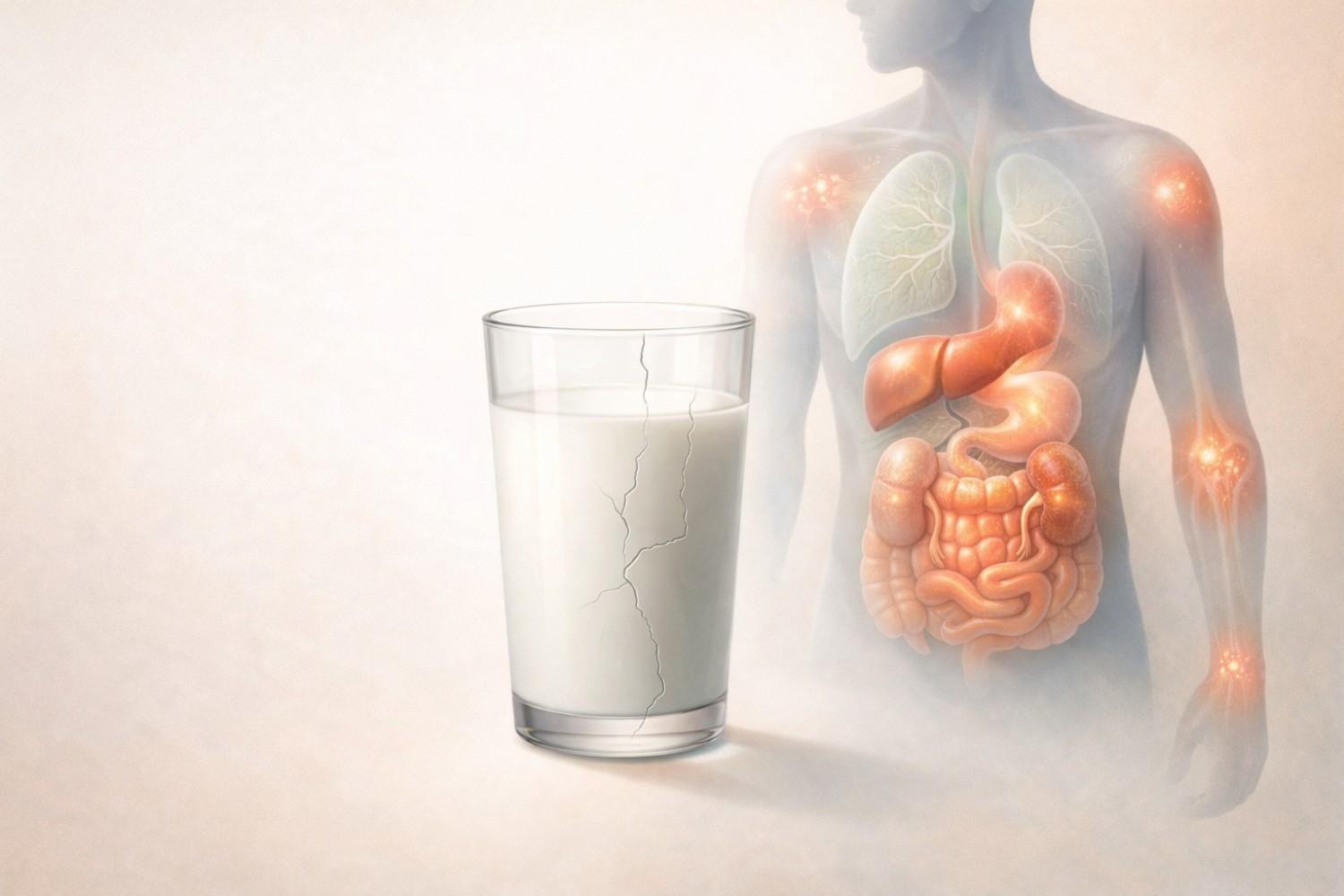
⚠️ Avoid mixing watermelon with dairy products if you have a sensitive stomach.
Side Effects of Watermelon (If Overeaten)
Eating too much watermelon may cause:
- Bloating or gas
- Frequent urination
- Blood sugar spikes (in diabetics)
- Acidity in sensitive individuals
Eating in moderation prevents these issues.
Is Watermelon Good for Diabetics?
Watermelon has a high glycemic index but low calorie load. Diabetics can eat watermelon:
- In small portions
- Not daily
- Preferably with other fiber-rich foods
Always monitor blood sugar levels.
FAQs About Watermelon
Is watermelon good for weight loss?
Yes, it is low-calorie and helps control hunger when eaten in moderation.
Can watermelon be eaten daily?
Yes, but in limited quantity.
Does watermelon improve skin glow?
Yes, due to hydration and vitamin C.
Is watermelon good for digestion?
Yes, it supports smooth digestion and prevents constipation.
Can we drink water after eating watermelon?
It is better to wait 20–30 minutes.
Conclusion
Watermelon is a healthy, refreshing, and hydrating fruit that supports digestion, heart health, skin glow, energy, and weight management. When eaten at the right time and in the right quantity, watermelon can be a valuable addition to a balanced diet, especially during summer.